
Legal Metrology GATC Amendment Rules 2026: Key Changes
The Ministry of Consumer Affairs, Food, and Public Distribution amended the Legal Metrology (Government Approved Test Center) Rules, 2013, to strengthen the testing and verification ecosystem for weights and measures.
Schedule a Call Back
700+ Legal Metrology assignments since 2018
Clients include Mankind Pharma, Ascent Meditech, Asio Healthcare, Naik Meditechs and Devices, Meora Healthcares, Radimage Healthcare India, ADK Health Care, Anglo French Drug and Industries, Antara Assisted Care Services, Gentec Medical, Aum Houseware, Esther Parfumerie (12 of 550+ served since 2018).
A few more clients we've served in this industryHide the list
- Pharma and healthcare
- Mankind Pharma · Ascent Meditech · Asio Healthcare · Naik Meditechs and Devices · Meora Healthcares · Radimage Healthcare India · ADK Health Care · Anglo French Drug and Industries · Antara Assisted Care Services · Gentec Medical
- Food and consumer goods
- Aum Houseware · Esther Parfumerie · Sats Food Solutions India · Rk Cosmetics · Afrodite Beauty
- Electronics and technology
- Martelx Electronics · Waites Sensor Technologies · Fleetx Technologies · Ingar Electronics · Watthut Electronics · Stmd Semiconductor · Agnext Technologies · Aten Advance
- Logistics and trade
- G Unit Logistics (India) · Honda Trading Corporation India · Zenexpress Logistics
- Engineering and manufacturing
- Juki India · Nibav Lifts · Birla Durotool · Inevia Automotiive
- More clients
- Telematics Design Solutions · Netgroove Distribution · Groag Products · GHV Medical Anchor · Viion Systems · Techno Sales Corporation · Nirvana India · Crystal Presentation Solutions · Seven Turns · Zivov Technologies · Mycelium Sona Biotech · Ratuman · Kleo Consumer Brands · Snuhi Retails · Virtual Instrumentation & Software Applicationsltd · Vitrag Infra Projects · Ample Digital · Abbie IT Mart
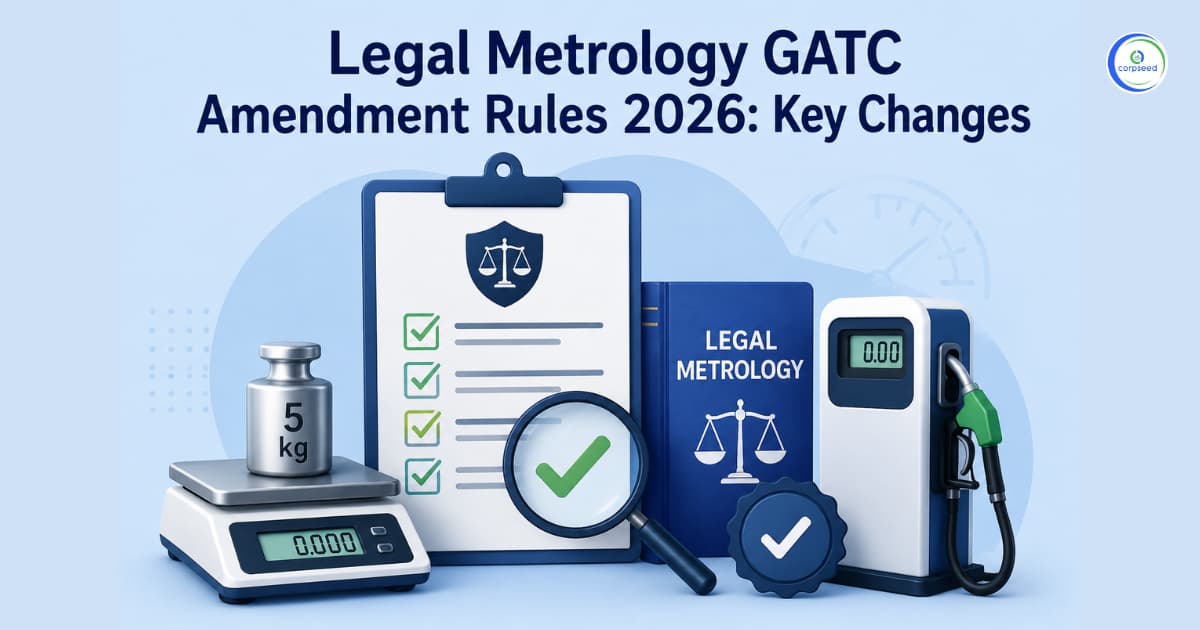
On May 8, 2026, the Indian government announced the Legal Metrology (Government Approved Test Center) Amendment Rules, 2026. The Legal Metrology Act of 2009's verification mechanism for fuel dispensers and measurement devices is also significantly altered solely by these reforms.
The list of instruments that must be verified through Government Approved Test Centers (GATCs) has been expanded by the Legal Metrology (Government Approved Test Center) Amendment Rules, 2026.
These instruments now include dispensers for gasoline, diesel, CNG, LPG, LNG, and hydrogen. Fuel stations, energy firms, and equipment manufacturers throughout India will be affected by the notification, which also modifies the verification costs and permits officials of rank equal to or higher than a Joint Secretary to exercise approval powers.
Schedule a Call Back
What are the Legal Metrology GATC Amendment Rules, 2026?
The Ministry of Consumer Affairs, Food, and Public Distribution amended the Legal Metrology (Government Approved Test Center) Rules, 2013, to strengthen the testing and verification ecosystem for weights and measures.
The amendment primarily focuses on:
- Expanding the list of equipment verified by GATCs.
- Introducing verification fees for fuel and gas dispensers.
- Updating all the administrative approval authority provisions.
- Including hydrogen dispensers under the verification regime
These changes came into force immediately upon publication in the Official Gazette on May 8 2026
Major Changes Introduced Under the Amendment
1. Change in Approval Authority
Earlier, approval-related functions under Rule 5(4) could only be exercised by the Joint Secretary. The amendment now permits - “An officer equivalent to or above the level of Joint Secretary”
This change is expected to improve administrative efficiency and reduce approval bottlenecks in GATC operations.
2. Expanded List of Instruments Verified by GATCs
The amended First Schedule now includes additional measuring instruments that require verification through Government Approved Test Centers.
Newly Added Instruments Under GATC Verification
| S.No. | Instrument/Equipment |
| 19 | Petrol/Diesel Dispenser |
| 20 | CNG Dispenser |
| 21 | LPG Dispenser |
| 22 | LNG Dispenser |
| 23 | Hydrogen Dispenser |
Apart from these, the schedule continues to include water meters, gas meters, clinical thermometers, weighing instruments, breath analyzers, energy meters, flow meters, and more.
This amendment significantly impacts:
- Petrol pumps
- CNG stations
- LNG and LPG dispensing facilities
- Hydrogen fuel infrastructure companies
- Fuel equipment manufacturers
- Calibration and testing agencies
3. Revised Verification Fees Under Fifth Schedule
The amendment also inserts new verification charges applicable per nozzle.
| Instrument/Equipment | Verification Fee |
| Petrol/Diesel Dispenser | ₹5,000 per nozzle |
| CNG Dispenser | ₹10,000 per nozzle |
| LPG Dispenser | ₹10,000 per nozzle |
| LNG Dispenser | ₹10,000 per nozzle |
| Hydrogen Dispenser | ₹10,000 per nozzle |
For multi-nozzle dispensing systems, overall compliance costs may increase substantially with the number of dispensing units installed at a facility.
Practical Compliance Challenges Businesses Face
While the amendment appears straightforward on paper, businesses often face several operational challenges during the compliance implementation.
1. Delay in Verification Appointments
Although approvals and verification procedures may officially appear time-bound, businesses frequently experience delays because:
- GATC appointment slots are very limited
- State-level coordination takes time.
- Portal processing delays are common.
- Calibration backlogs may increase during the renewal cycles.
In practical scenarios, businesses or companies must expect verification timelines to exceed official estimates, especially in high-demand states.
2. Documentation Mismatch
One of the most common reasons for rejection is inconsistency between:
- Equipment serial numbers
- Manufacturer certificates.
- Calibration records
- Site installation details
Even minor mismatches can lead to resubmission requirements and operational delays.
3. Nozzle Configuration Errors
For fuel dispensing units, authorities often reject applications because:
- Nozzle count details are incorrect.
- Multi-product dispensers are improperly categorized
- Supporting technical specifications are incomplete
Many businesses underestimate the importance of technical documentation accuracy during Legal Metrology verification.
Cost of Non-Compliance
Operating an unverified dispensing system may also attract penalties under the Legal Metrology Act, including fines, equipment seizures, suspension of operations, and prosecution for repeated violations. For some fuel stations and gas-dispensing businesses, non-compliance can also affect customer trust and operational continuity. To comply smoothly with the amended GATC Rules, businesses should follow this checklist:
- Identify Applicable Equipment: Check whether your dispensing systems or measuring instruments fall under the updated First Schedule of the act.
- Review Technical Documentation: Ensure all the calibration certificates, model approvals, installation details, and manufacturer specifications are up to date.
- Coordinate with Approved GATCs: Also, book the verification appointments well in advance to avoid operational delays.
- Maintain Verification Records: Keep proper records for inspections and future renewals.
- Conduct Internal Compliance Audits: Periodic audits help identify issues before regulatory inspections.
Conclusion
Ultimately, the Legal Metrology (Government Approved Test Center) Amendment Rules, 2026, also set the crucial compliance requirements for companies operating measurement and gasoline-dispensing equipment throughout India. A major regulatory expansion has occurred with the mandated GATC verification of gasoline, diesel, CNG, LNG, LPG, and hydrogen dispensers.
But filing all the necessary paperwork is only one aspect of compliance. All technical documentation, calibration accuracy, verification schedules, and inspection readiness must be efficiently managed by businesses.
Also, organizations can avoid delays and costly rejections and maintain continuous operations with the help of professional compliance support. Expert support ensures seamless Legal Metrology compliance while firms remain focused on expansion and operations, from managing portal procedures to preparing companies for inspections and renewal deadlines.
About the Author

Anshika Jindal
Content WriterAnshika Jindal, a Legal Content Writer with strong expertise in legal research and a solid academic background in BA LLB and LLM (Criminal Law). I specialize in researching statutes, case laws, and legal developments and presenting them in clear, accurate, and engaging written content. With strong analytical skills and attention to detail, I create reliable, well-structured legal content while maintaining professional and ethical standards.
I specialize in conducting in-depth legal research using credible sources and presenting legal information in a structured, reader-friendly manner while maintaining precision and authenticity. My work focuses on simplifying legal language without compromising its meaning, making legal content accessible to a wider audience.
Related articles
Legal Metrology (General) Fourth Amendment Rules, 2026: Complete Guide to New Verification Rules and Revised Penalties
2026-07-07
How to Check and Verify Barcode Number in 2026
2026-06-01
Delhi Government Issues Draft Legal Metrology (Enforcement) Amendment Rules, 2026
2026-05-29

Delhi Legal Metrology (Enforcement) Amendment Rules, 2026
2026-02-24
India Enforces New Radar Equipment Speed Measurement Regulations: Legal Metrology Amendment Rules, 2025
2025-01-20

LMPC Rules for First-Time Entrepreneurs: A Step-By-Step Guide
2024-11-19