
How to Check and Verify Barcode Number in 2026
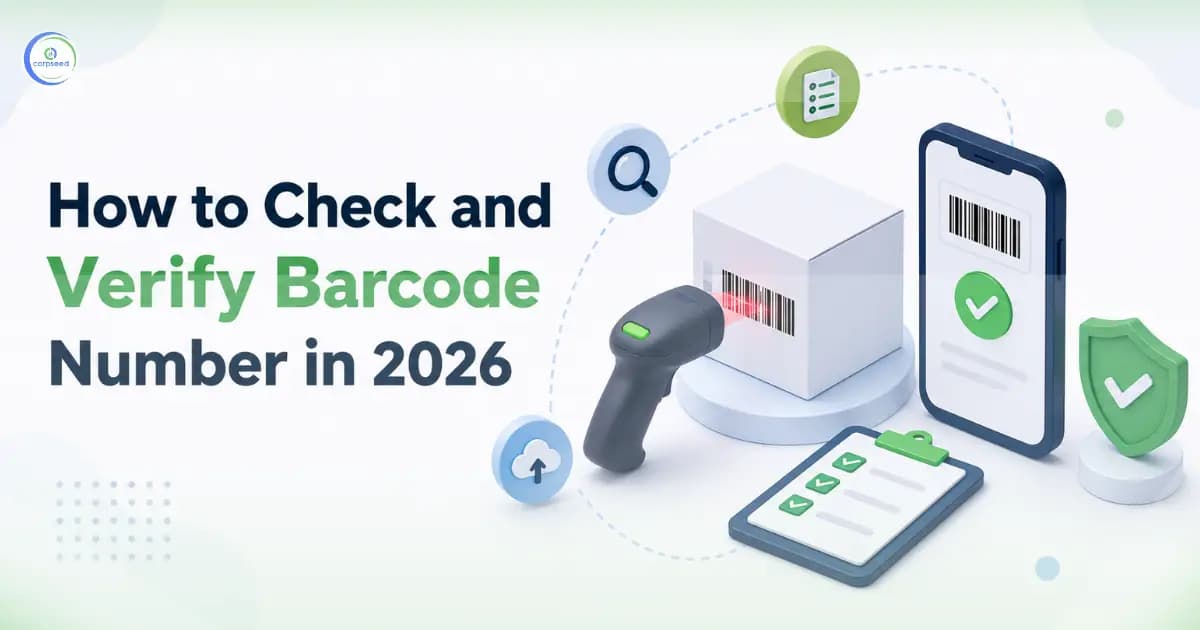
A barcode is a one-of-a-kind code composed of numbers, along with a specific pattern of stripes that represents a particular product.
Schedule a Call Back
Introduction
Have you ever questioned if a product barcode you scanned was authentic or not? To verify product legitimacy, manufacturer details, and the correctness of the supply chain, barcode verification has become a crucial step for organizations, companies, retailers, and even consumers in 2026. Verified barcode numbers help reduce counterfeit goods and foster consumer confidence in both retail establishments and online or electronic commerce platforms.
Barcode verification in 2026 also involves several factors, including verifying that a barcode number is valid, registered, and linked to the correct and updated product or manufacturer. Businesses and consumers can verify barcodes via official databases, barcode lookup tools, and GS1 verification systems. The Barcode registration process also helps to detect fake products, maintain inventory accuracy, and ensure compliance with global product identification standards.
What is a Barcode?
A barcode is a one-of-a-kind code composed of numbers, along with a specific pattern of stripes that represents a particular product. These codes are designed to be scanned by optical readers, just like the ones you see at checkout counters in retail stores. But since the lines correspond to a list of numbers, it's easy to look up any product with a barcode simply by matching those numbers to an entry in a database.
Why Barcode Verification Matters?
Below are the following reasons for the necessity of barcode verification:
- Grade Barcode Quality: Barcode verifiers analyse codes and assign letter or number grades (A-F or 4-0) to measure the quality of a barcode. Codes that score a C or higher are considered passing codes and 100% scannable.
- Diagnose and Fix Errors: Verification tools identify issues such as poor print quality or bad formatting using the ISO/IEC 15415, ISO/IEC 15416, and AIM DPM (ISO/IEC TR 29158) guidelines. This process helps catch and fix impassable barcode issues early, preventing problems further down the line. Barcode verification software also provides the information needed to improve the code so it passes.
Who needs barcode verification?
Quality assurance managers, engineers, and line technicians need barcode verification when tasked with requirements such as:
- Generate barcodes for regulated industries, including medical devices, pharmaceuticals, automotive, aerospace, packaging, retail, and printing.
- Generate barcodes in a highly controlled “open system.”
- Need to produce reports confirming barcode quality.
What are the different types of barcodes?
There are different types of barcodes. They're known as Global Trade Item Numbers (GTINs), which are product identifiers represented in the following barcode formats:
- GS1: GS1 India is a not-for-profit organization that serves as the official and authorized body for allocating GS1 barcodes in India. It is part of the global GS1 network, which develops and maintains international standards for supply chain management, including barcodes.
- UPC (Universal Product Code): The United States, Canada, the United Kingdom, Australia, New Zealand, and many other countries generally use Universal Product Codes (UPCs), also known as the GTIN-12 barcode format, because they have 12 digits.
- EAN (International Article Number): Merchants in Europe and other parts of the world often use an International Article Number (EAN, formerly known as European Article Number). There are EAN-8 and EAN-13 barcode types.
- ISBN (International Standard Book Number): Books use the International Standard Book Number (ISBN) barcode format, which is compatible with EAN barcodes. Every book edition and variation has its own ISBN, which can be either an ISBN-10 or an ISBN-13.
- JAN (Japanese Article Number): This type of barcode is used in Japan and can be either 8- or 13-digit. An EAN prefix, which starts with 45 or 49 as the first two digits, indicates a Japanese Article Number (JAN).
- ITF-14: You'll find ITF-14 (also known as GTIN-14) barcodes on multipack products, such as shipping boxes. They're often used to identify different packaging levels and configurations.
How to Verify a Barcode Number?
Following these steps helps to ensure that the barcode registration number is valid and ready for use.
Step 1: Verify the Format: Ensure the barcode number has the correct number of digits, such as 12 or 13
Step 2: Verify the Source: Verify that the code also originates from an authorized issuing body
Step 3: Use Validation Tools: To confirm the barcode's authenticity, enter it into a reliable or updated online resource.
Step 4: Match product Data: Verify that the barcode returns accurate product information.
Step 5: Check: Always double-check if the product information has changed.
Conclusion
In order to verify product authenticity, track manufacturer information, and lower the possibility of counterfeit goods entering the market, barcode verification has become a crucial step for both consumers and businesses in 2026. Even a minor error in barcode records can subsequently cause operational and legal issues, whether you are registering new products, verifying barcode data, or guaranteeing adherence to industry standards.
Professional assistance makes the process simpler and more dependable in this situation. We handle the paperwork and portal issues so you can focus on running your company. By reviewing barcode documentation, compliance standards, and product records in advance, our team also helps companies remain inspection-ready. In addition to filing paperwork, we prepare you for official inspections before they take place. Our clients receive automated alerts 60 days before each license expiration to ensure continuous compliance, helping them avoid delays, fines, or renewal issues.
About the Author

Anshika Jindal
Content WriterAnshika Jindal, a Legal Content Writer with strong expertise in legal research and a solid academic background in BA LLB and LLM (Criminal Law). I specialize in researching statutes, case laws, and legal developments and presenting them in clear, accurate, and engaging written content. With strong analytical skills and attention to detail, I create reliable, well-structured legal content while maintaining professional and ethical standards.
I specialize in conducting in-depth legal research using credible sources and presenting legal information in a structured, reader-friendly manner while maintaining precision and authenticity. My work focuses on simplifying legal language without compromising its meaning, making legal content accessible to a wider audience.
Related articles
Legal Metrology (General) Fourth Amendment Rules, 2026: Complete Guide to New Verification Rules and Revised Penalties
2026-07-07
Delhi Government Issues Draft Legal Metrology (Enforcement) Amendment Rules, 2026
2026-05-29
Legal Metrology GATC Amendment Rules 2026: Key Changes
2026-05-12

Delhi Legal Metrology (Enforcement) Amendment Rules, 2026
2026-02-24
India Enforces New Radar Equipment Speed Measurement Regulations: Legal Metrology Amendment Rules, 2025
2025-01-20

LMPC Rules for First-Time Entrepreneurs: A Step-By-Step Guide
2024-11-19