
Can You Import Products Before BIS Certification? What Importers Must Know
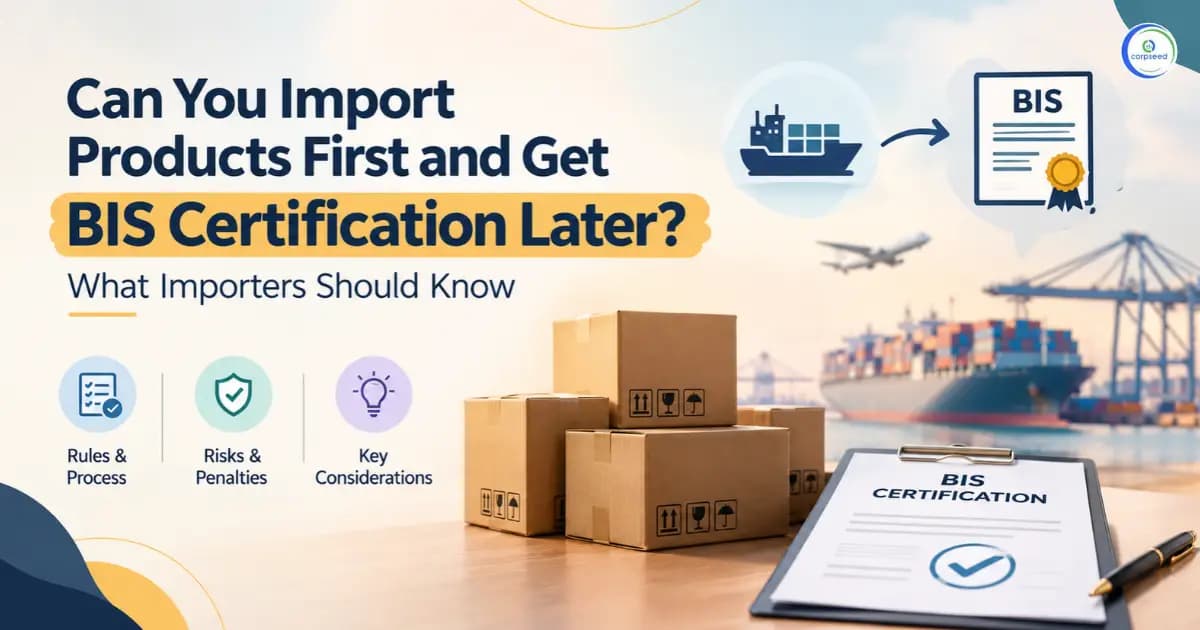
Can you import products before BIS certification in India? It depends on whether the product falls under a mandatory Quality Control Order (QCO).
Schedule a Call Back
750+ BIS certification assignments since 2018
Clients include Juki India, Nibav Lifts, Normet India, Hirotec India, Kito India, Technotorc Tools, N Steels, Agromach Engineering, Emerson Automation Solutions Intelligent Platforms, Intangles Lab, Deki Electronics, Emerson Process Management (India) (12 of 450+ served since 2018).
A few more clients we've served in this industryHide the list
- Engineering and manufacturing
- Juki India · Nibav Lifts · Normet India · Hirotec India · Kito India · Technotorc Tools · N Steels · Agromach Engineering
- Electronics and technology
- Emerson Automation Solutions Intelligent Platforms · Intangles Lab · Deki Electronics · Emerson Process Management (India) · Martelx Electronics · Waites Sensor Technologies · Fleetx Technologies · Comap India
- Jewellery
- Swarnmala Jewellers · Muktavali Jewellers · Omana Jewels · Escarl Jewels · Aahaana Mooguthi · Aparna Jewels · Arraa Gold · DV Jewellery
- Pharma and healthcare
- Radimage Healthcare India · Sonova Hearing India · Agfa Healthcare India
- Energy and power
- Bitek Solar · Sodion Energy · Essar Oil and Gas Exploration and Production
- Chemicals and materials
- Sreechem Resins · Appl GOR Plastics India · Global Colours and Chemicals
- More clients
- Nilkamal · Siddhartha Logistics · GHV Medical Anchor · Geepas India · Smarthome Solutions India · Lumiere Technologies · Tegamen Safety Products · Patel Agrotech · Abbie IT Mart · Aqua Water Systems (India) · Pentair Water Treatment · WIN the BUY BOX · TNY Services (India) · Silcom (PTY) · Zeal Medical
Introduction
If the order is already in force, the importer must meet its certification requirements before importing the product, unless an exemption applies. Simply applying for a BIS licence does not give permission to import goods that require certification. Products not covered by a mandatory QCO may not need BIS certification. Importers should check the applicable order, and its effective date before the supplier dispatches the goods.
The answer depends on the product, its applicable Indian Standard, the relevant QCO and its current implementation date. Importers should check these details before paying a supplier, confirming a shipment or arranging customs clearance. Discovering a certification requirement after dispatch can leave an importer with goods that cannot be cleared or used as planned.
What Does BIS Certification Mean for Importers?
The Bureau of Indian Standards (BIS) is India's national standards body. Its product certification schemes are generally voluntary, but the Central Government makes certification mandatory for specified products through QCOs and other applicable notifications.
The requirement is product-specific. An importer cannot decide whether certification is mandatory simply by looking at the product's commercial name or the supplier's assurance. The applicable order, Indian Standard, product description and relevant conditions must be checked.
BIS publishes a list of products under compulsory certification. Check the current list and the relevant order before placing an import order. The list and implementation dates may change as new orders, amendments and extensions are notified.
Who needs to hold the BIS licence?
For products covered by mandatory certification, the certification is generally granted to the manufacturer for the relevant product and manufacturing premises. Depending on the applicable scheme, this may involve an ISI Mark licence, registration under the Compulsory Registration Scheme (CRS), a Certificate of Conformity or another prescribed approval.
An Indian importer, distributor or retailer does not normally obtain the manufacturer's product certification in its own name. However, the importer must check that the goods are sourced from a manufacturer holding the required valid approval.
For overseas suppliers, the applicable route depends on the product and certification scheme. The Foreign Manufacturers Certification Scheme (FMCS) covers products other than the electronic and IT goods dealt with under the relevant registration scheme. Do not assume that one certification route applies to every product.
Can an Indian importer apply for BIS certification on behalf of a foreign manufacturer?
Under FMCS, the foreign manufacturer applies for the licence. An importer cannot simply apply in place of the manufacturer and treat that application as the manufacturer's approval.
The importer can coordinate with the supplier, help collect commercial and technical information, and seek professional assistance with the process. The manufacturer must still meet the applicable requirements, and obtain the required approval.
Before accepting a supplier's claim that certification is underway, ask for the application status, and the expected next steps. Do not treat an application acknowledgement, test report or consultant's assurance as proof that a licence has been granted.
What is the difference between a pending application and an approved licence?
A pending application means the certification process has not necessarily been completed. Depending on the scheme, further testing, factory assessment, document review or other steps may remain.
An approved licence or registration is different. It must be valid and cover the product being imported under the applicable scheme.
Before shipment, verify:
- The manufacturer's legal name and manufacturing location.
- The relevant Indian Standard and certification scheme.
- The product, model or variety covered by the approval, as applicable.
- The brand and other identification details required under the scheme.
- The licence or registration status and validity.
A supplier may hold a genuine BIS licence for one product but not for another. Checking only the supplier's name or a certificate image is not enough.
Can You Ship or Import Goods While BIS Certification Is Pending?
The important question is whether the goods will comply with the applicable requirements when the relevant QCO or other mandatory provision applies to them. Booking a shipment or receiving a purchase order does not, by itself, create an exemption from certification.
What if the goods have not left the supplier's factory?
This is the best time to resolve a certification issue. Ask the supplier to confirm whether the product is covered by a mandatory requirement and whether the required approval has been granted for the exact product and factory.
If certification is mandatory and the licence has not yet been granted, the supplier should hold the shipment until approval is received. The purchase agreement should also be checked for terms covering certification delays, order cancellation, storage charges and responsibility for additional costs.
Do not rely only on a statement that the application has been submitted. Ask for verifiable licence or registration details and compare them with the goods you intend to buy.
What if the shipment is already in transit?
If goods have already left the supplier's country, the importer still needs to check whether BIS certification is required for their entry into India. Dispatching the goods before a QCO takes effect does not, by itself, exempt the shipment from the order's requirements.
Check the QCO's effective date, any amendments and the provisions for goods already in transit. If the supplier says BIS certification is under process, request the application details, and any licence already issued.
The importer should also discuss the shipment with the customs broker and seek clarification from the concerned authority if the applicable requirements are unclear.
What if the goods have reached an Indian port?
Do not assume that goods will be cleared simply because they have arrived or the import documents have been filed.
If the product requires mandatory certification and the shipment does not meet the applicable requirements, customs clearance may be delayed or refused, subject to the governing order and the facts of the case. Storage, demurrage, handling and contractual costs may also arise.
Take these steps before making further arrangements:
- Identify the exact product and the QCO, or notification that may apply.
- Check the commencement date and any later amendments, or exemptions.
- Verify whether the manufacturer has the required approval for the product.
- Ask your customs broker to review the shipment documents and current clearance position.
- Seek clarification from the authority responsible for the relevant order if applicability is uncertain.
Do not assume that certification can be completed retrospectively and the shipment released automatically. The available options depend on the applicable order and the circumstances of the goods.
What Happens If You Import Products Without Required BIS Certification?
The consequences depend on the product, the governing order and the circumstances of the import. Where mandatory requirements apply, non-compliant goods can face clearance problems and other enforcement action under the relevant law.
Potential consequences for the importer include:
- Customs Clearance Delays: Goods may remain at the port while the required BIS certification or other documents are checked.
- Extra Costs: Delayed clearance can add port storage, demurrage, handling and logistics charges to the shipment cost.
- Disputes with the Supplier: If the goods cannot be cleared, the importer and supplier may disagree over who will pay the extra charges or arrange the return of the shipment.
- Inventory Disruption: Goods may not be available for planned sales, installation or production.
- Regulatory Consequences: Contraventions may attract action under the applicable order and legislation.
These outcomes should not be treated as automatic in every case. The legal position depends on the applicable requirement, any valid exemption and the facts surrounding the shipment.
For importers, the most practical safeguard is to verify certification before committing to dispatch. A supplier's export experience, or previous successful shipments does not prove that the current product, model or manufacturing location meets India's current requirements.
Are There Exemptions from Mandatory BIS Certification?
Some orders provide exemptions for specified products, uses, transactions or categories of import. These are not universal exemptions from BIS requirements. The relevant QCO or notification must expressly support the exemption being claimed.
BIS's guidance document on Quality Control Orders explains that exemptions are handled by the ministry or regulator responsible for the relevant order and should be set out in the applicable QCO.
- Product-specific exemptions
An exemption may depend on the product's intended use, quantity, category, end user or other conditions specified in the notification. A product that appears similar to an exempt item may not qualify if it falls outside the wording of the order.
Before relying on an exemption, record:
- The exact clause or notification that provides it.
- The product description and scope covered by the clause.
- The conditions the importer must satisfy.
- Any declarations, approvals or supporting documents required.
- Whether the exemption applies to the proposed shipment and intended use.
Do not treat a supplier's previous exemption approval as automatically valid for a new order. Check whether the same conditions are met.
- QCO commencement dates and extensions
The notification date, and the date a QCO comes into force are not necessarily the same. An order may specify a future commencement date and a later notification may amend or extend that date.
For this reason, importers should check the latest version of the applicable order rather than relying on an old compliance calendar or an undated online article.
A product that is not yet subject to a particular mandatory requirement may be treated differently from the same product after the relevant provision comes into force. The exact position depends on the wording of the order and any amendments or transitional provisions.
- Imports intended for export production
Some notifications allow specified inputs to be imported without BIS certification when they are used to manufacture goods for export. The exemption applies only where the relevant notification permits it. Importers must follow the stated conditions, which may cover the use of imported materials, export obligations, required undertakings and restrictions on selling or clearing those materials in the Indian market.
They should not be treated as a general exemption for goods imported for ordinary domestic sale. Check the relevant QCO, foreign trade policy provision and notification before relying on this route.
How Can Importers Check Whether a Product Requires BIS Certification?
Before arranging shipment, work through the following checks.
- Identify the product and applicable Indian Standard
Start with the product's technical details, not just its invoice description. Record the intended use, specifications, model, brand, manufacturing location and other characteristics relevant to the applicable standard.
The QCO may cover a product differently from what its trade name suggests. Check the product's technical details and specifications against the order. If you cannot confirm whether BIS certification applies, get clarification from the concerned authority before placing the import order.
- Check the current QCO and its commencement date
Search the current BIS compulsory certification list and open the relevant order or notification. Read the product scope, Indian Standard, commencement date and amendments.
Where the product is regulated by a ministry or department other than BIS, review that regulator's official notifications as well. BIS provides certification services, but the government order establishes the mandatory requirement, and its scope.
- Verify the manufacturer's licence and product scope
Ask the manufacturer for its BIS licence or registration number. Check the details on the official BIS website and confirm that the licence covers the product you intend to import and the factory where it is made.
For electronics and IT products, check whether the Compulsory Registration Scheme applies. For other products, identify the relevant certification scheme instead of assuming that every product uses the ISI Mark route.
- Confirm whether an exemption applies
If the supplier says certification is not required, ask for the exact legal basis. Check the wording, conditions, and documentation requirements against the actual shipment.
If the position remains unclear, seek written clarification from the authority responsible for the relevant order. Keep the response with your import records.
- Complete the review before dispatch
Once the product requirement and certification status have been checked, confirm that the commercial order, and shipment documents match the goods being supplied.
This review should take place before dispatch, not only when the customs broker prepares the bill of entry. It gives the importer more time to resolve differences in model details, documentation or certification status
- Confirm whether an exemption applies
If the supplier says certification is not required, ask for the exact legal basis. Check the wording, conditions and documentation requirements against the actual shipment.
If the position remains unclear, seek written clarification from the authority responsible for the relevant order. Keep the response with your import records.
BIS Certification Checklist Before Placing an Import Order
Use this checklist before confirming a shipment of a product that may be subject to mandatory BIS requirements.
| Check | What to Verify |
| Product scope | Exact product description, intended use and technical specifications |
| Indian Standard | The standard referenced by the applicable order |
| QCO status | Whether the product is currently covered by a mandatory requirement |
| Implementation date | Commencement date and any notified extension |
| Certification scheme | Applicable licence, registration or conformity assessment route |
| Manufacturer | Correct legal name and manufacturing premises |
| Product coverage | Model, variety, brand or other details relevant to the approval |
| Validity | Current status and validity of the licence or registration |
| Exemption | Exact legal provision and conditions, if claimed |
| Shipment records | Invoice, packing list and other documents consistent with the product details |
| Contract terms | Responsibility for certification, delays, return costs and regulatory issues |
| Final review | Customs broker or compliance specialist has reviewed unresolved issues |
Keep copies of the order, official notifications, licence verification and supplier correspondence. These records can help explain the basis for the import decision if questions arise later.
What Should You Do If Your Shipment Is Already on the Way?
If you have discovered a possible BIS requirement after dispatch, start by establishing the actual regulatory position. Avoid relying on informal assurances from the supplier or assuming that the shipment will be cleared because payment has already been made.
Use the following steps:
- Identify the exact product: Collect its specifications, model details, brand, manufacturer, and factory information.
- Check the applicable order: Review the QCO, or notification, commencement date, amendments and any relevant exemptions.
- Verify certification: Establish whether the manufacturer holds the required approval for the goods in transit.
- Speak with your customs broker: Ask what documentation and regulatory checks are needed for the particular shipment.
- Seek official clarification where required: If the order's scope or exemption is uncertain, contact the authority responsible for it.
- Review the commercial position: Check the contract for delay, cancellation, return, storage and responsibility clauses.
The available options will depend on the governing notification and the shipment's circumstances. Do not assume that re-export, destruction, retrospective certification or clearance under an exemption is available in every case.
Also Read: BIS Certification for Imported Products in India: Complete Guide for Importers
How Can a BIS Consultant Help Importers?
A BIS consultant can help importers establish which requirements apply before they commit to an order. This is particularly useful when the product description is broad, the manufacturer is overseas, the applicable QCO has been amended or the shipment schedule is tight.
Support may include:
- Reviewing product specifications against the applicable Indian Standard and QCO.
- Identifying the relevant certification scheme.
- Checking manufacturer licence details, and product coverage.
- Reviewing potential exemptions against the applicable notification.
- Coordinating with the manufacturer on certification documents and application status.
- Helping prepare a compliance checklist for future import orders.
A consultant cannot guarantee approval, customs clearance or an exemption. The final position depends on the applicable law, the evidence available and decisions made by the competent authorities.
Conclusion
Before importing a product, check whether a mandatory BIS certification requirement applies to it. A supplier's assurance or a pending licence application is not enough to confirm that the goods can be imported. The product, manufacturer, applicable QCO and its effective date all need to be checked.
For goods awaiting dispatch, ask the supplier to sort out the BIS certification requirement before sending them. If the shipment has already left the factory, check the applicable QCO and discuss the case with your customs broker. If the supplier claims an exemption, ask them to provide the notification that allows it and check whether your shipment qualifies.
Planning an import and unsure whether BIS certification applies?
Consult Corpseed's BIS certification experts for help reviewing the product requirements, manufacturer approval and applicable QCO before dispatch.
About the Author

Parul Bohral
Legal Content WriterParul Bohral, a BALLB graduate and experienced legal researcher and content writer with expertise in various legal areas, including corporate law and intellectual property. I have gained valuable experience in esteemed legal environments, where I have strengthened my research skills, allowing me to approach legal writing with precision and depth.
As a legal content writer, I am committed to delivering work that not only informs but also engages readers. By staying informed about the latest trends in content marketing and regulatory developments, I ensure that my writing remains sophisticated and meets industry standards. My dedication to thorough research enables me to craft content that is both insightful and impactful.
Related articles
IEC vs Import Licence: When Restricted Goods Need DGFT Approval Beyond IEC
2026-10-26

Selling Imported Goods on Amazon & Flipkart? 7 Compliance Checks Before Listing
2026-10-15
Rules of Origin Explained: A Complete Guide for Exporters and Importers
2026-08-06
DGFT Extends India-UAE CEPA Gold Import TRQ Deadline
2026-07-08

Impact of China’s Lithium Policy Changes on India’s EV Sector
2026-03-18

DGFT Amends IEC Application Process under HBP 2023
2025-12-01