
Common Reasons CDSCO Applications Get Delayed or Rejected
Common reasons CDSCO applications get delayed or rejected often include incomplete documentation, incorrect product classification, inconsistencies in submitted data and delayed responses to regulatory queries. Even a minor oversight in the CDSCO registration process can result in approval delays, increased costs and repeated submissions, affecting timely market entry for drugs and medical devices.
Schedule a Call Back
2,100+ CDSCO medical device assignments since 2018
Clients include Endolite India, Mankind Pharma, Ossur India, ADK Health Care, Credence Prosthetic India, V2U Physio Asia, International Electro Medical Company, Radimage Healthcare India, Istok New Hearing AID, Simpladent Implant Solutions, Starkey Laboratories India, Gentec Medical (12 of 1,100+ served since 2018).
A few more clients we've served in this industryHide the list
- Pharma and healthcare
- Endolite India · Mankind Pharma · Ossur India · ADK Health Care · Credence Prosthetic India · V2U Physio Asia · International Electro Medical Company · Radimage Healthcare India · Istok New Hearing AID · Simpladent Implant Solutions · Starkey Laboratories India · Gentec Medical · Cureesse Pharma · Hygiene Medicus · Nexus Surgical and Medicare
- More clients
- Meditronix Corporation · Nilkamal · Haesi GHL · GHL · Servotech Power Systems · Elektrocraft India · Happy Medicare · Anantaa Gsk Innovations · Cogmac Technologies · Aficionados Tech · Superceuticals · Truevis Technologies · 1008 Digital Health · BDS Services · Evoq Imaging Technologies · Premier Medical Systems and Devices · Riransa · Vitrag Infra Projects · Insta Biotech · Digital Acoustics · Artificial Learning Systems India · Nfilade Security Solutions · Humors Tech · K2O Consulting
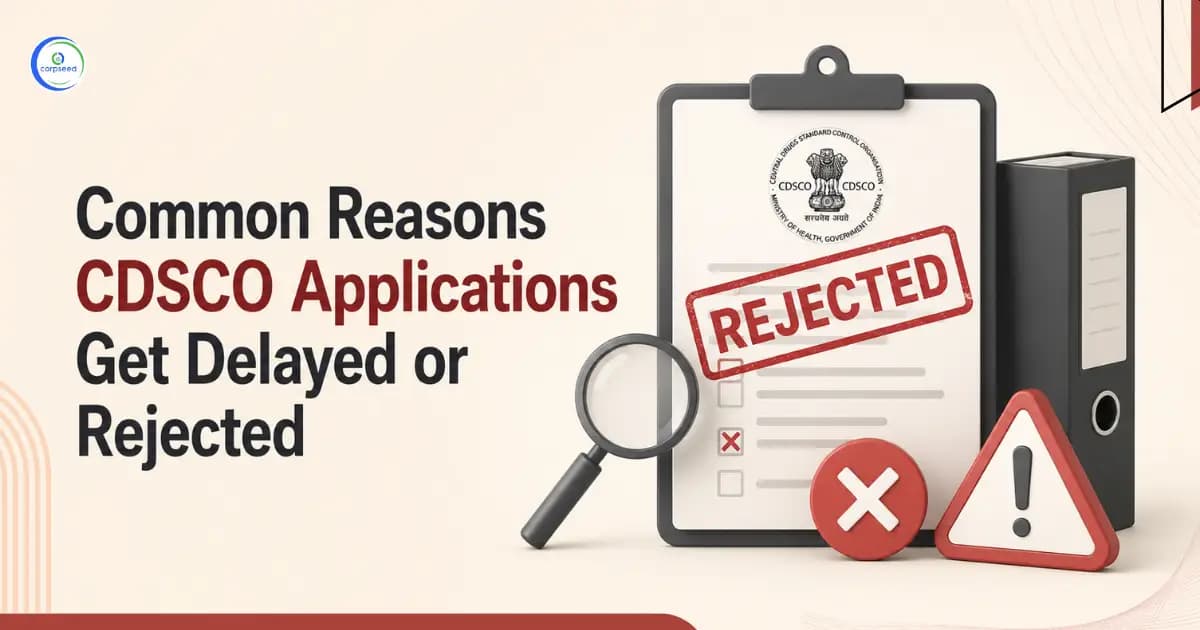
Understanding the CDSCO Registration Process
The Central Drugs Standard Control Organization (CDSCO) regulates the import, manufacture, sale and distribution of drugs and notified medical devices in India. Depending on the product category, businesses may require a CDSCO license before introducing products into the Indian market.
The CDSCO registration process generally involves identifying the correct regulatory pathway, compiling supporting documents, submitting the application through the designated portal and responding to any clarification requests raised by the authority. Since different products have different requirements, accuracy at each stage is essential.
A well-prepared CDSCO application not only supports faster review but also reduces the risk of application rejection.
Schedule a Call Back
Common Reasons CDSCO Applications Get Delayed or Rejected
Several recurring issues contribute to CDSCO approval delays and application deficiencies.
- Incomplete Documentation: It is one of the leading causes. Missing certificates, unsigned declarations, incomplete forms or outdated records can trigger deficiency letters and prolong the review process.
- Incorrect Product Classification: Medical devices and drugs follow different regulatory routes. Choosing the wrong category may lead to rejection of the application or resubmission requirements.
- Inconsistencies in Submitted Information: Submitting incorrect or incomplete information can also raise concerns. Differences in product details, manufacturing site information, labelling data or technical specifications across documents may affect the credibility of the application.
- Failure to Meet CDSCO Documentation Requirements: This often leads to avoidable setbacks. Applications must consist of all the necessary supporting evidence as prescribed under the relevant CDSCO guidelines.
- Poor Quality Technical Documentation: Inadequate product descriptions, insufficient performance data or unclear supporting information can lead to additional queries.
- Delayed Responses to Deficiency Letters: Delayed responses can further extend approval timelines. Prompt and accurate responses are critical to maintaining application momentum.
- Lack of Regulatory Planning: Organizations that proceed without understanding the applicable CDSCO regulatory requirements may encounter repeated corrections during the review stage.
These common CDSCO registration mistakes highlight the importance of preparation and attention to detail.
Read Our Blog: CDSCO Approval for Cosmetic Products in India
How to Avoid Delays and Rejections in CDSCO Applications
Delays in the CDSCO registration process are primarily caused by avoidable errors in documentation and compliance. A structured approach can help reduce CDSCO approval delays and improve chances of successful clearance.
- Ensure Complete and Accurate Documentation: All the necessary documents should be verified before final submission. Missing certificates, unsigned forms or outdated records are among the most common reasons for CDSCO application rejection. A complete documentation checklist aligned with CDSCO guidelines helps avoid unnecessary queries.
- Select the Correct Product Classification: Correct classification of drugs or medical devices is essential in the CDSCO registration process. Incorrect categorization may lead to application rejection or re-submission requests, delaying CDSCO approval timelines.
- Maintain Consistency in All Submitted Data: All technical details, labelling information and manufacturing data must match the provided documents. Any inconsistency may raise questions at the time of review and result in deficiency notices from CDSCO authorities.
- Follow Applicable CDSCO Regulatory Requirements: There are specific CDSCO regulatory requirements for each product category. Failure to comply with these standards may cause application rejection or delay during the assessment stage.
- Respond Promptly to Deficiency Letters: Responding in a timely and complete manner to deficiency letters is non-negotiable. Delays in addressing queries from CDSCO can extend the approval timeline and can adversely affect the overall process of the approval.
- Conduct an Internal Compliance Review before Submission: A final internal audit is a crucial step which most applicants avoid. It ensures that the application meets all CDSCO documentation requirements. This step is beneficial to address mistakes as early as possible and enhances the chances of smooth approval without further amendments.
When Should Businesses Address Errors in a CDSCO Application?
Errors in a CDSCO application should be corrected immediately to avoid delays in approval and compliance issues.
- Immediate Correction before Submission: Errors identified before filing should be fixed at once. This helps prevent rejection and improves the chances of smooth CDSCO approval.
- Pre-submission Review of Documents: A detailed review helps identify gaps in CDSCO documentation requirements and ensures accuracy across all submitted information.
- Prompt Response after Deficiency Letter: When CDSCO issues a deficiency letter, all observations must be addressed carefully and within the specified timeline to avoid delays in the CDSCO registration process.
- Early Intervention for Better Outcomes: Fixing errors at an early stage is more effective and cost-efficient than correcting them after multiple rounds of regulatory review.
Consequences of Non-Compliance with CDSCO Regulations
Failure to comply with applicable CDSCO requirements may have serious business implications.
Some of the common consequences include:
- Delays in obtaining CDSCO approval
- Increased administrative costs due to repeated submissions
- Extended product launch timelines
- Temporary disruption of commercial plans
- Additional regulatory scrutiny during future applications
How Professional Assistance Can Help Ensure CDSCO Compliance
Regulatory requirements under CDSCO guidelines can be complex, especially for organizations handling multiple products or entering the Indian market for the first time.
Professional assistance can be useful for comprehending the CDSCO registration process, ensuring correct documentation, and determining possible loopholes before submission. It also helps in analysing applications for deficiencies and responding to regulatory questions in an organized manner. The applicant is solely responsible for compliance, but expertise can help in minimising errors, avoiding CDSCO approval delays and a smoother approval process.
Conclusion
Understanding the common reasons CDSCO applications get delayed or rejected is essential for organizations seeking timely market access. Incomplete documentation, incorrect product classification, inconsistent information and delayed responses to regulatory queries continue to be among the most frequent causes of CDSCO approval delays.
Businesses that prioritize documentation preparation and follow applicable CDSCO guidelines are more likely to pass the registration process effectively. A proactive approach to CDSCO compliance not only reduces the risk of rejection but and contribute to a smoother product commercialization in the Indian market.
Frequently Asked Questions
Quick answers to common questions on this topic.
What are the common reasons CDSCO applications get delayed or rejected?
Common reasons include incomplete documentation, incorrect product classification, inconsistencies in submitted information, poor technical documentation and delayed responses to deficiency letters.
How can businesses avoid CDSCO application rejection?
Businesses can reduce rejection risks by following CDSCO guidelines, conducting documentation reviews, ensuring data consistency and responding promptly to regulatory queries.
Does product classification affect CDSCO approval?
Incorrect classification of drugs or medical devices may lead to application deficiencies, delays or rejection.
What is a deficiency letter from CDSCO?
A deficiency letter is a communication issued by CDSCO seeking clarification, additional documents or corrections related to an application under review.
Why is CDSCO compliance important?
CDSCO compliance supports regulatory approval, facilitates market entry, minimizes delays and helps organizations meet applicable legal requirements.
About the Author

Parul Bohral
Legal Content WriterParul Bohral, a BALLB graduate and experienced legal researcher and content writer with expertise in various legal areas, including corporate law and intellectual property. I have gained valuable experience in esteemed legal environments, where I have strengthened my research skills, allowing me to approach legal writing with precision and depth.
As a legal content writer, I am committed to delivering work that not only informs but also engages readers. By staying informed about the latest trends in content marketing and regulatory developments, I ensure that my writing remains sophisticated and meets industry standards. My dedication to thorough research enables me to craft content that is both insightful and impactful.
Related articles
CDSCO Test License for Import (Form MD-16)
2026-11-18
CDSCO Test License for Manufacturing (Form MD-12)
2026-11-18
Medical Devices PLI Scheme 2026: New Applications, Eligibility, Incentives & Benefits
2026-11-12
CDSCO MD-7 Endorsement for Medical Devices: A Practical Guide for Manufacturers
2026-10-23
CDSCO Export NOC for r-DNA Products: Who Needs It?
2026-10-21
CDSCO Registration: A Simple Guide to Getting Your License in India 2026
2026-10-21