
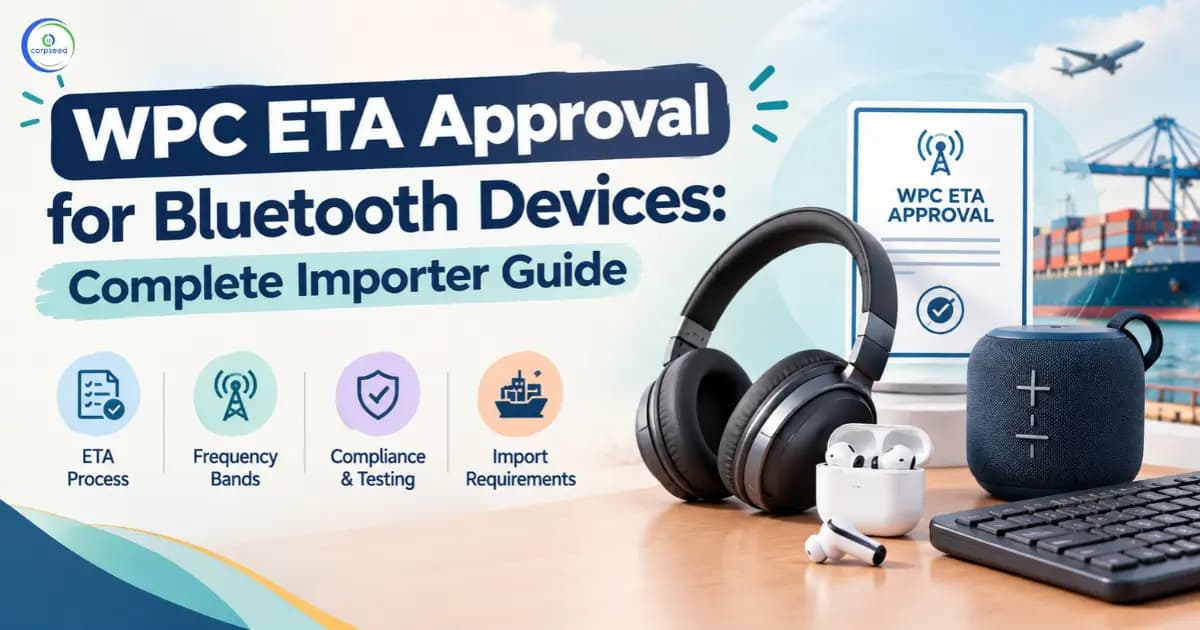
WPC ETA Approval for Bluetooth Devices: Complete Importer Guide
Importing Bluetooth headphones, speakers, keyboards or other wireless products into India requires a check of the applicable WPC requirements before shipment.
Schedule a Call Back
350+ WPC ETA approval assignments since 2018
Clients include Sonova Hearing India, Ossur India, Waites Sensor Technologies, Power-One Micro Systems, Martelx Electronics, Fleetx Technologies, Envoys Electronics, Locanix, Enertech UPS, FluxGen Sustainable Technologies, Consilium Safety India, Encardio-Rite Electronics (12 of 90+ served since 2018).
A few more clients we've served in this industryHide the list
- Pharma and healthcare
- Sonova Hearing India · Ossur India
- Electronics and technology
- Waites Sensor Technologies · Power-One Micro Systems · Martelx Electronics · Fleetx Technologies · Envoys Electronics · Locanix · Enertech UPS · FluxGen Sustainable Technologies · Consilium Safety India · Encardio-Rite Electronics · HASHh IoT Labs
- Engineering and manufacturing
- Nibav Lifts · Sarda Metals & Alloys
- More clients
- GHV Medical Anchor · Telematics Design Solutions · Asian Contec · Hpfs Instruments India · 1008 Digital Health · Automap Software and Technologies · Viion Systems · Enertech Industrial Solutions · Jumpking International · Uctl · Daikin Airconditioning India · Nirvana India · Albatross Flying Systems · Zivov Technologies · Pentair Water Treatment · Ecosi Energy · Premier Elmechsystems · TVT Trading Enterprise · Aspire High India · Ctrs Concrete Planners · Teknoworth Medical Care · Liger Mobility · The Inforbit Corp
Introduction
The Wireless Planning and Coordination (WPC) Wing of the Department of Telecommunications (DoT) issues Equipment Type Approval (ETA) for eligible wireless equipment.
Bluetooth products may qualify for the ETA self-declaration process, provided they meet the applicable frequency and import-policy conditions. The application generally requires an RF test report, technical literature and manufacturer authorisation where an Indian representative applies on behalf of a foreign manufacturer.
For importers, the first step is to confirm the approval route for the exact product. A Bluetooth device may also contain Wi-Fi, cellular or other wireless functions, so its complete technical configuration needs to be checked before the application is filed.
What Is WPC ETA Approval for Bluetooth Devices?
WPC ETA is an Equipment Type Approval issued by the WPC Wing under the Department of Telecommunications. It covers the applicable radio-frequency requirements for eligible wireless equipment.
Bluetooth devices transmit radio signals, usually in the 2.4 GHz band. Products such as wireless earphones, speakers, computer accessories and smartwatches can fall within the ETA self-declaration category when they meet the prescribed conditions.
The DoT lists finished wireless products, including headphones, earphones, speakers, computers, printers, cameras and short-range devices, among the products that may use this process.
Under the self-declaration route, applicants submit the required technical documents and pay the prescribed fee through the designated portal. Once the application has been processed successfully, the ETA certificate can be downloaded.
The certificate deals with the applicable wireless equipment requirements. It does not automatically cover every other permission that may be required to import or sell the product in India.
Which Bluetooth Devices May Need WPC ETA?
Importers should check the WPC requirements for the specific product they intend to bring into India. Common examples include:
| Bluetooth Product | What to Check before Importing |
| Wireless headphones and earbuds | Bluetooth specifications, RF test report and model details |
| Portable Bluetooth speakers | Operating frequency and any additional wireless functions |
| Wireless keyboards and mice | Bluetooth connectivity and the specifications of any separate RF receiver |
| Smartwatches | Bluetooth, Wi-Fi and cellular functions, where fitted |
| Bluetooth printers | Radio specifications and other connectivity options |
| Wireless computer accessories | RF module details and applicable approval conditions |
| Industrial Bluetooth equipment | Frequency, intended use and eligibility for the self-declaration route |
| Bluetooth modules | Module specifications, test reports and import-policy conditions |
This list is intended to help importers identify products for review. It does not mean that every product in these categories follows an identical approval procedure.
For example, a Bluetooth speaker with only Bluetooth connectivity may have different documentation requirements from a smart device that combines Bluetooth, Wi-Fi and cellular communication. The additional radio functions should be reviewed before deciding which approvals are needed.
Is WPC ETA Mandatory for Bluetooth Device Imports?
The requirement depends on the equipment, its operating frequency and the applicable regulatory and import-policy conditions.
According to the DoT's ETA FAQ, the self-declaration route applies to products that meet both of these conditions:
- They operate in frequency bands that are de-licensed under the applicable notifications.
- They are exempt from import licensing requirements under the applicable DGFT Import Policy.
Bluetooth functionality alone does not establish that a product meets both conditions.
Importers should check the following before ordering the goods:
- Whether the product operates within the permitted frequency bands.
- Whether it qualifies for ETA through self-declaration, or requires another approval route.
- Whether DGFT import-policy conditions or additional clearances apply.
- Whether other product-specific requirements need to be met before sale in India.
The DoT's memorandum dated 9 September 2024 also states that ETA holders remain responsible for obtaining DGFT clearances, including an NOC where applicable, before importing equipment.
Importers can refer to the official DoT Equipment Type Approval service for the applicable conditions and current filing instructions.
What Are the Requirements for WPC ETA Approval?
Before applying for WPC ETA approval, importers should check the device specifications and arrange the documents required by DoT. The main requirements include:
- Frequency and Radio Specifications: Check the device's operating frequency, wireless functions and RF modules to confirm that it meets the applicable requirements. Products with Bluetooth, Wi-Fi or other wireless features may need additional checks.
- RF Test Report: Submit the relevant RF test report from an accredited laboratory. The report must match the product or RF module covered by the application. If the device contains multiple RF modules, the required reports must be submitted for all relevant modules without alteration, as specified by DoT.
- Technical Literature: Technical literature helps identify the product and its wireless features. A product datasheet containing the model number and radio specifications can help the applicant prepare the application accurately.
- Manufacturer Authorisation: If an Indian representative applies on behalf of a foreign manufacturer, the required manufacturer authorisation must be provided.
Check the latest DoT portal instructions before submitting the application to confirm that all required documents are in order.
Documents Required for WPC ETA Approval
Prepare the relevant documents before starting the application.
| Document | Purpose |
| RF test report | Provides technical information about the product's radio-frequency characteristics |
| Technical literature or product datasheet | Identifies the model and its wireless specifications |
| Manufacturer authorisation | Required where an Indian representative applies on behalf of a foreign manufacturer |
| RF module details | Helps establish which wireless modules are fitted to the equipment |
| Applicant and product information | Used to complete the application |
| Fee payment details | Records payment of the prescribed ETA fee |
Before submission, compare the model number on the test report with the product being imported. If the report relates to a separate RF module, confirm that it is suitable for the proposed application.
How to Apply for WPC ETA Approval for Bluetooth Devices
The following steps cover the general process for eligible products using the self-declaration route.
Step 1: Check the Product's Eligibility
Collect the product datasheet and identify its operating frequency and wireless functions. Check the relevant DoT notifications and DGFT import-policy conditions to establish whether the product qualifies for self-declaration.
If it does not qualify, confirm the appropriate procedure with WPC before proceeding.
Step 2: Arrange the Technical Documents
Obtain the RF test report, technical literature and manufacturer authorisation where applicable.
Check the model number, manufacturer details and RF specifications across the documents. If the device has multiple RF modules, identify the reports required for each module.
Step 3: Submit the Application
Follow the application instructions on the official DoT ETA service page. The published self-declaration process directs applicants to the SARAL Sanchar portal.
Enter the required details, upload the documents and review the application before submission. Check the live portal instructions in case the filing procedure has changed.
Step 4: Pay the Prescribed Fee
The DoT lists an ETA fee of Rs 10,000. Follow the prescribed payment procedure and retain the payment record.
Step 5: Download the Certificate
After the application has been processed successfully, download the ETA certificate and keep it with the product's technical and import records.
Check the certificate details before using it for the relevant consignment.
Step 6: Review the Remaining Import Requirements
Before shipment or customs clearance, check whether DGFT clearance, an NOC or any other product-specific permission is required. ETA should not be treated as a substitute for separate import approvals.
What Is the WPC ETA Approval Fee?
The published fee for ETA is Rs 10,000. The DoT FAQ specifies this fee for each product containing one or more built-in RF modules. The product may be a finished model or an RF module.
This is the prescribed ETA fee, not necessarily the total cost of obtaining approval. Laboratory testing, document preparation and professional assistance may involve separate expenses.
Importers sourcing several Bluetooth products should confirm the applicable application and fee requirements for their products before filing.
Does WPC ETA Approval Cover Every Bluetooth Product?
An importer should not assume that an approval for one device automatically covers every model from the same manufacturer.
The certificate and supporting technical documents must correspond to the product or RF module covered by the application. Differences in model numbers, wireless functions or RF hardware should be checked before relying on an existing approval.
Consider an importer purchasing two versions of wireless earbuds from the same supplier. If the products use different RF modules, the importer should check whether the existing test reports, and ETA documentation cover both versions.
Before reusing a certificate or technical report, compare the model details and module specifications. If the scope is unclear, seek confirmation from the relevant authority.
What Should Importers Check Before Customs Clearance?
ETA is one part of the regulatory documentation for wireless products. Before the consignment arrives, review the following:
- ETA Certificate: Check the certificate details against the product being imported.
- Model Information: Match the model number and radio configuration with the supporting documents.
- DGFT Requirements: Confirm whether an NOC, or other import clearance is applicable.
- Customs Documents: Keep the invoice, packing list, shipping documents and relevant regulatory records ready.
- Other Product Requirements: Check whether separate requirements apply to the device, battery, power adapter or other components.
- Record Keeping: Retain the certificate, RF test report, technical literature and payment details.
Completing these checks before shipment gives the importer time to obtain missing documents or resolve differences in the product specifications.
Common Mistakes to Avoid
- Using a Report for a Different Model: A test report that does not match the product may not support the application as intended.
- Assuming every Bluetooth Device Qualifies for Self-declaration: The applicable frequency and import-policy conditions must both be checked.
- Ignoring other Wireless Functions: Products with Wi-Fi, cellular connectivity or additional RF modules may need further regulatory review.
- Treating ETA as the only Import Requirement: DGFT clearances and other product-specific permissions may still apply.
- Submitting Incomplete Documents: Missing RF details, or inconsistent model information can delay the application.
- Leaving Approval Checks until the Goods Arrive: Discovering a documentation problem after shipment can lead to avoidable delays and costs.
A document review before dispatch helps identify these issues while the supplier can still provide missing technical information.
Also Read: Festive Electronics Import Checklist 2026: BIS, WPC, EPR & LMPC Requirements
How Can a WPC ETA Consultant Help?
Importers dealing with several Bluetooth models or overseas manufacturers may need help checking the technical documents and application requirements.
A WPC ETA consultant can assist with reviewing product specifications, checking the required documents and identifying questions that need to be resolved before filing. Professional support can also help importers understand whether additional wireless or import-related clearances may apply.
Businesses looking for WPC advisory services can consult Corpseed’s experts for professional guidance on documentation, application assistance and follow-up.
Conclusion
Importers should check the WPC ETA requirements for the exact Bluetooth device they plan to bring into India. The RF test report, model details and other required documents should be ready before the application is filed.
If you are unsure which documents your product needs or how to apply, a WPC ETA consultant can help review the requirements and prepare the application. Businesses seeking WPC ETA approval services should also check whether their products need any additional import clearances before shipping.
About the Author

Parul Bohral
Legal Content WriterParul Bohral, a BALLB graduate and experienced legal researcher and content writer with expertise in various legal areas, including corporate law and intellectual property. I have gained valuable experience in esteemed legal environments, where I have strengthened my research skills, allowing me to approach legal writing with precision and depth.
As a legal content writer, I am committed to delivering work that not only informs but also engages readers. By staying informed about the latest trends in content marketing and regulatory developments, I ensure that my writing remains sophisticated and meets industry standards. My dedication to thorough research enables me to craft content that is both insightful and impactful.
Related articles
WPC ETA Lab Testing: A Simple Guide to RF Testing and ETA Certification in India
2026-10-28

WPC (Wireless Planning and coordination) compliance services in India
2025-05-17

India Opens 6 GHz Band for Unlicensed Wireless Use: Draft Rules Under Telecommunications Act, 2023
2025-05-17

Telecommunications (Framework to Notify Standards, Conformity Assessment, and Certification) Rules, 2025: A Comprehensive Overview
2025-05-17

The Role of WPC Certification in Ensuring Product Quality and Safety
2024-11-29

The Future of WPC Certification: Trends and Regulatory Changes
2024-11-22