
FSSAI Bans 100% Organic Claims: What Food Companies Need to Know
Many food companies use claims such as "100% organic", "100% pure" and "100% natural" on food labels, packaging and advertisements. These claims attract customers because they make products appear healthier, safer, and of higher quality. However, consumers may believe that such products are completely pure, contain no unwanted ingredients or are superior to similar products. This is why the topic of FSSAI bans on 100% organic claims has become important for food manufacturers and marketers.
Schedule a Call Back
500+ FSSAI licence assignments since 2018
Clients include Bidada Foods, Silvertip Foods, Good Food Innovations, Minimal Food, Alluring India Foods and Beverages, Auroras TEA Company, Ania Consumer Products, Ginger Foods Company, Magnalis Foods, ND Spices, Antara Assisted Care Services, Aggriveda Pharmaceutical (12 of 350+ served since 2018).
A few more clients we've served in this industryHide the list
- Food and consumer goods
- Bidada Foods · Silvertip Foods · Good Food Innovations · Minimal Food · Alluring India Foods and Beverages · Auroras TEA Company · Ania Consumer Products · Ginger Foods Company · Magnalis Foods · ND Spices
- Pharma and healthcare
- Antara Assisted Care Services · Aggriveda Pharmaceutical
- Logistics and trade
- Solankili Logistics Management · 23North Logistics Solutions
- Non-profits and education
- All India Hindu Mahajot Foundation · Manovikas Charitable Society
- More clients
- Cure and Care Wellness · Seven Turns · Akshamaala Solutions · Krisba Healthcare · Matha Exports International · Indo Gulf Company · Crescent Biologicals · Cura Consumer Health · Biolush · Cura Consumer · Ethics Prosperity · Rocking Deals · Subohi Agriparks · Aurous International Merchants · Anagh Traders · Shin Traders · Zexcorp Services · Aprodite Infotech · Grandmaz Organics · Instruments and Chemicals · Aaravbabbar Enterprises · DUA OLD Age Caring Institution · Goenka Scrapco · Prime Health
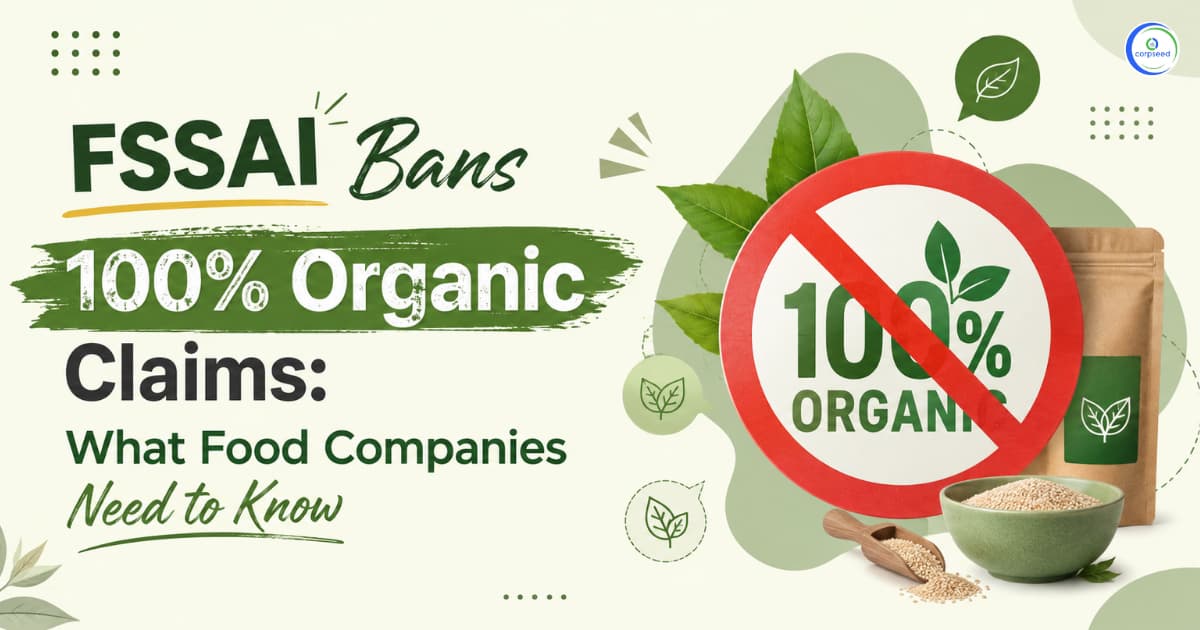
Many food companies use claims such as "100% organic", "100% pure" and "100% natural" on food labels, packaging and advertisements. These claims attract customers because they make products appear healthier, safer, and of higher quality. However, consumers may believe that such products are completely pure, contain no unwanted ingredients or are superior to similar products. This is why the topic of FSSAI bans on 100% organic claims has become important for food manufacturers and marketers.
In 2025, FSSAI asked food businesses to stop using the term "100%" on labels, packaging and promotional materials. This statement came from the regulator, who said the term is ambiguous under current food legislation and can be misleading. It is not a new statutory provision, but food businesses should still pay attention to it.
On the other hand, FSSAI issued an order prohibiting one food business. However, the Delhi High Court imposed a stay on this particular order on 7 August 2026. A stay on this order does not permit all companies to make 100% claims.
Schedule a Call Back
What Are the Latest FSSAI Rules on "100% Organic" Food Labels?
India's basic food law framework begins with the Food Safety and Standards Act, 2006. It establishes FSSAI, regulates the manufacture, storage, distribution, sale and import of food, and prohibits misleading descriptions and advertisements. Regulations made under the Act provide the detailed requirements.
The Food Safety and Standards (Advertising and Claims) Regulations, 2018 are central to this issue. Regulation 4(1) requires that a claim be truthful, unambiguous, meaningful, not misleading, and useful to consumers. Regulation 10(7) addresses advertisements or claims that undermine other products or mislead consumers. These are important parts of FSSAI advertising and claims regulations.
The Food Safety and Standards (Organic Foods) Regulations, 2017 regulate when foods may be labelled as organic foods. The Food Safety and Standards (Labelling and Display) Regulations, 2020 provide rules about declaring and labelling pre-packed foods. These two regulations make up the practical foundation for compliance with the FSSAI labelling rules. It helps to distinguish five legal documents:
It is helpful to identify five legal instruments:
- An Act is an enactment of law enacted by Parliament.
- A regulation is an obligatory rule made using the power provided by the Act.
- An advisory is an instrument that indicates the regulator's interpretation or the expected approach to compliance.
- An enforcement order applies regulatory powers to specified conduct or products.
- A court order controls the dispute before the court. An interim order preserves the position temporarily; a final judgment decides the case.
The advice of 28 May 2025 requested all food companies to stop using the term "100%". The enforcement notice of 3 August 2026 was aimed only at one firm and specified products. The High Court issued a temporary stay on this notice on 7 August 2026 until the next hearing. This is important when considering the question "Is 100% Organic Banned in India by FSSAI?"
Why Does FSSAI Consider "100%" Food Claims Misleading?
The core problem is not the number by itself. It is the absolute message that consumers may take from it. "100%" is not specifically defined for general food claims, yet it can suggest complete purity, guaranteed superiority or the total absence of anything undesirable.
Consider honey. "Honey" may be a legally standardised, single-ingredient product, but "100% pure" could be understood as a guarantee about origin, processing, contaminants and authenticity all at once. A business must know exactly what the claim communicates and what evidence supports each reasonable interpretation.
The same issue arises with ghee and edible oils. The use of processing aids, blending, allowable tolerances, differences in the source, and testing can introduce problems into the absolute assertion. When it comes to coconut milk, the inclusion of water or any other permissible ingredient may call the "100% natural" claim into question.
Apple cider vinegar may be marketed by reference to its source or method. Yet "100% authentic" does not specify which measurable feature is guaranteed. A packaged organic cereal may contain certified organic ingredients, but certification does not automatically prove that every part of the pack, process or marketing message is "100% organic".
It is also true that FSSAI's concern is comparative in nature. When a product carries an absolute purity claim, it can lead consumers to assume that other products are impure or noncompliant with the law, even when they are not.
Are "100% Pure" and "100% Natural" Claims Also Banned by FSSAI?
The advisory concerns the use of "100%" generally, not only 100% organic food claims. Expressions such as "100% pure", "100% natural", "100% purity guaranteed" and "100% authentic" face the same concern: they can make an absolute promise without a defined regulatory meaning.
Removing the number is not an automatic solution. "Completely chemical-free", "all-natural" and "no artificial ingredients" must still be assessed against the ingredients, composition, processing method, permitted additives and supporting records. "Chemical-free" is especially risky because food, water and naturally occurring substances are all made of chemicals in the scientific sense.
| Marketing claim | Potential compliance concern | Potentially safer alternative |
| 100% pure honey | “Pure” may imply several unqualified guarantees | “Single-ingredient honey”, if accurate |
| 100% natural coconut milk | Processing and permitted additives may conflict with consumer expectations. | “Made from coconut and water”, if accurate |
| 100% organic cereal | Certification may not support an absolute whole-product claim | “Certified organic” with the applicable certification details |
| 100% purity guaranteed ghee | “Guaranteed” may be broad and difficult to verify | A specific, testable composition statement |
| Completely chemical-free oil | Scientifically vague and potentially misleading | A precise statement about an identified excluded substance |
| No artificial ingredients | Requires a complete formulation and processing review | Use only where the formulation and evidence support it |
These alternatives are illustrative. They must be factually correct and legally reviewed before use; no replacement phrase is safe merely because it sounds less absolute.
What Is the Difference Between "Organic" and "100% Organic"?
FSSAI's position on "100%" should not be described as a complete ban on the word "organic". "Organic" has a regulated meaning: the product must be produced in accordance with specified organic production standards and meet the Organic Foods Regulations.
Certification for most packaged organic products in India can be achieved either through NPOP, a third-party certification program, or PGS-India, which relies on stakeholder participation and peer review. There are some exceptions to this, in the form of direct sales by small original producers and by some intermediaries.
Organic labels must give full and accurate information about the product's organic status. Applicable products may carry the relevant certification or quality-assurance mark along with FSSAI's Jaivik Bharat logo, which distinguishes regulated organic food from non-organic food. Businesses must also comply with the general FSSAI rules for food packaging, ingredient declarations, and applicable food standards.
"Organic", "natural", "pure" and "chemical-free" are not interchangeable. Organic refers to compliance with recognised production and certification requirements. "Natural" and "pure" can be vague unless tied to clear facts. "Chemical-free" is usually scientifically imprecise.
For instance, when a grain packed according to NPOP requirements is labelled as"certified organic,” it will bear the appropriate marks and information. However, if we go a step further to call the grain “100% organic,” then we are making an absolute statement that cannot be validated by certification alone.
Why Did the Delhi High Court Stay FSSAI's "100%" Claims Ban?
On 3 August 2026, FSSAI issued a company-specific prohibition order restricting the sale of several food products carrying expressions such as “100% pure”, “100% natural”, “100% purity guaranteed” and “100% organic”. The company challenged the order, including the procedure used to issue it.
The main interim issue was natural justice. This means a person affected by an adverse decision should ordinarily receive notice and a fair opportunity to respond. The company argued that it had not received a show-cause notice or a hearing before the prohibition was imposed. FSSAI referred to an earlier improvement notice and the general advisory.
As per the interim order of the Delhi High Court dated 7 August 2026, the court held that the prohibition order should not have been passed without affording the company an opportunity to be heard. “Prima facie” means the initial impression or belief formed before thorough investigation and is not the final verdict after the trial.
It directed a stay of the order till the next date of hearing and the company to file its reply before the next date of hearing. As per the information up to 10 August 2026, the matter is fixed for 24 August 2026. This is the latest available hearing status.
An interim stay is a suspension of an order's operation; it neither decides on the order's validity nor does it mean that 100% pure and 100% natural claims are legal in India. It will allow the court to examine the regulator's powers, procedures, evidence, and the merits of the claims.
How Can Food Companies Comply With FSSAI Labelling Rules?
A practical review should cover the product, the pack and every place where the claim appears. Manufacturers, importers, product owners, retailers and advertising agencies can use this checklist:
- Audit every product label and package. Include outer cartons, multipacks, stickers and old inventory.
- Flag “100%”, “pure”, “natural”, “organic” and similar wording. Search product names, taglines, icons and images as well as the main description.
- Review the composition and ingredient declaration. Check whether the message matches the recipe, standards, additives and processing aids.
- Verify organic certificates and validity. Confirm the product, operator, scope, certification system and dates.
- Collect laboratory reports and other evidence. Evidence should match the exact claim and current formulation.
- Review websites, marketplaces and social media. Online descriptions must not make claims that have been removed from the physical pack.
- Check influencer and distributor content. Give partners correct & approved wording and monitor material published on your behalf.
- Correct unsupported or ambiguous claims. Prefer specific, measurable facts that ordinary buyers can understand.
- Maintain a claim file. Keep certificates, test reports, supplier declarations, approvals and review records for every claim.
- Obtain a professional review of the food packaging label before printing. Early review reduces the chance of unusable packaging and rushed corrections.
A thorough review also checks mandatory declarations such as the name of the food, ingredients, allergens, nutrition information, veg or non-veg symbol, net quantity, dates, storage directions, business details and licence number, where applicable. This is why food business operator compliance should not be limited to the removal of a single disputed term.
Specialist FSSAI compliance services can bring regulatory and commercial teams into the same review. A food labelling compliance consultant can compare artwork with the formula, product standard and certification documents. An FSSAI legal consultant can assess disputed wording, help respond to notices, and prepare a corrective action report.
Useful food regulatory compliance services may include pre-print packaging review, verification of mandatory declarations, analysis of advertising claims, assessment of organic certification and review of marketplace copy. They can also identify inconsistencies across pack sizes or sales channels before launch.
If your company is undergoing any changes to artwork, consider getting a documented FSSAI labelling compliance check. The checker would have to explain their recommendations and not necessarily guarantee you approval. Food labelling compliance checks in India would reduce the likelihood of enforcement actions, recalls, re-stickering, and packaging waste.
Conclusion
The phrase "FSSAI bans 100% organic claims" refers to a real regulatory warning, but it should not be read as a permanent statutory ban on every legitimate use of "organic". FSSAI is scrutinising absolute "100%" claims because they may be undefined, difficult to prove and misleading.
The general advisory remains relevant, while one company-specific enforcement order has been stayed temporarily. The final position in that dispute is unresolved. Food businesses should use specific, accurate and verifiable claims; consumers should check ingredient lists, certification details and recognised organic marks. Good food marketing begins with evidence, not merely attractive packaging.
About the Author

Mahek Sancheti
Content WriterMahek Sancheti, BAJMC graduate with a deep passion for writing. As a content writer, video content creator, creative content creator, and scriptwriter, I bring stories to life through words and visuals. I honed my skills by working with a prominent news agency, where I excelled in crafting compelling narratives and engaging content. Coming from a journalism and mass communication background I have skills to craft engaging narratives that captivate audiences. With a keen interest in writing and creativity, I aim to deliver impactful and meaningful content that resonates with diverse audiences.
https://www.linkedin.com/in/mahek-sancheti-837196212
Related articles
FSSAI State License Renewal in India 2026: Process, Fees & New Rules
2026-11-12
FSSAI Central License Renewal in 2026: Rules, Fees, Documents & Process
2026-11-12
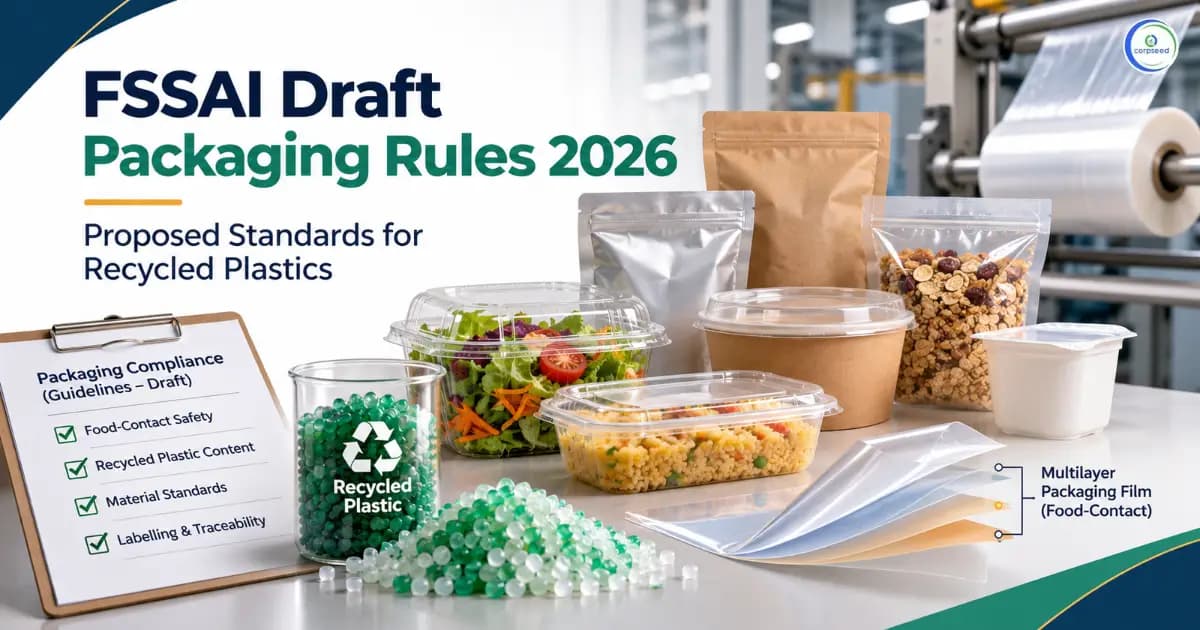
FSSAI Draft Packaging Rules 2026: New Standards for Recycled Plastic in Food Packaging
2026-11-04

Selling Food Online? FSSAI Rules for Amazon, Flipkart, Swiggy, Zomato & Marketplace Sellers (2026)
2026-10-15
FSSAI Diwali Drive 2026: Food Safety Inspection Checklist for Food Businesses
2026-10-14
FSSAI Licence vs Registration for Sweet Shops, Bakeries & Home Bakers
2026-10-13