
New Import Rules on Roller Chains Aim to Boost India’s Manufacturing Sector
In a strategic move to strengthen domestic manufacturing and regulate imports, the Central Government has revised the import policy related to roller chains and their parts.
Schedule a Call Back
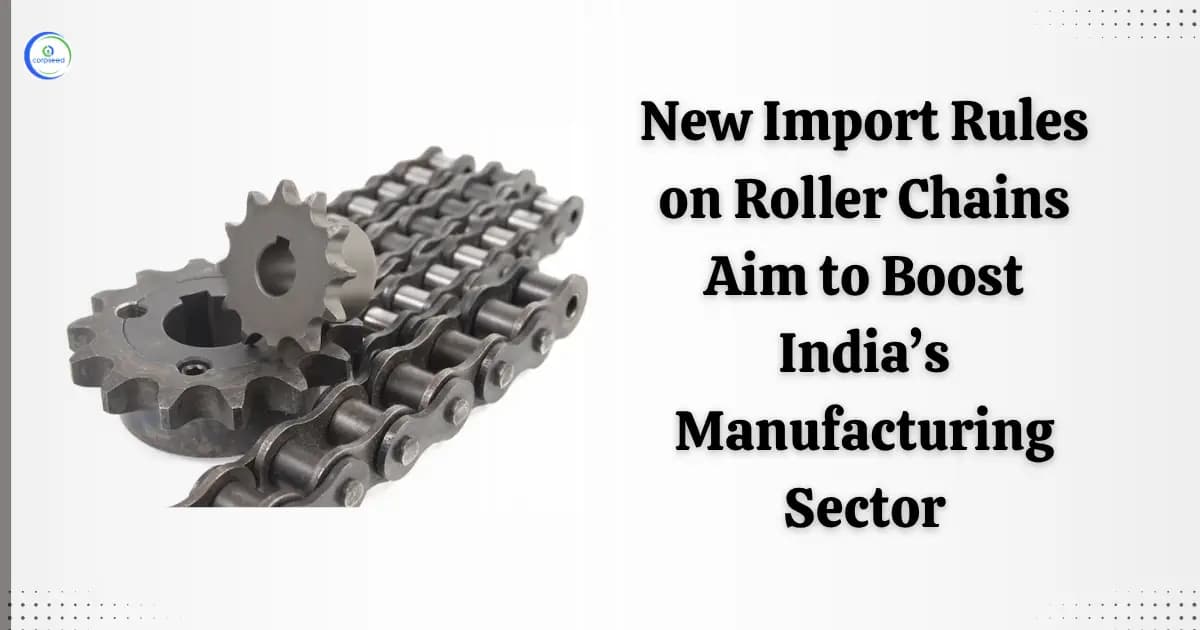
In a strategic move to strengthen domestic manufacturing and regulate imports, the Central Government has revised the import policy related to roller chains and their parts. This amendment specifically targets items classified under certain HS codes in Chapter 73 of the Indian Trade Classification (Harmonized System), 2022, Schedule - I, and has come into effect immediately.
The key amendment restricts the import of roller chains and related components if their cost, on a CIF (Cost, Insurance, and Freight) basis, is below ₹235 per kilogram. Imports falling under this value will now be classified as ‘Restricted’, indicating a substantial shift aimed at curbing the influx of low-cost imports that could possibly undermine domestic manufacturers.
This policy update has been issued under the powers established by the Foreign Trade (Development & Regulation) Act, 1992, with the approval of the Minister of Commerce & Industry. This demonstrates the government's commitment to maintaining a balanced trade environment and enhancing domestic industrial development.
Focus on Roller Chains and Parts
Roller chains are important mechanical components that are widely used in industries including automotive and heavy machinery sectors. India’s manufacturing environment depends heavily on these parts, which faces extreme competition from imported products often priced considerably lower compared to domestic counterparts. By imposing restrictions on imports under a particular CIF value, the government seeks to guard and encourage local manufacturers.
This regulation confirms that imported goods meet the minimum value threshold, helping to prevent the market from being filled with cheap, possibly low-quality products. The amendment applies to:
| ITC(HS) Code | Description | Import Policy | Existing Policy Condition | Revised Policy Condition |
| 73151100 | Articulated link chain and parts thereof : -- Roller chain | Free | - | However, import of Roller chains and parts thereof having a CIF value of less than ₹ 235 per kilogram is 73151900 - Articulated link ‘Restricted’. |
| 73151100 | - Articulated link chain and parts thereof : -- Parts | Free | - | |
| 73151100 | - Other parts | Free | - |
Effect of the Notification
The import of roller chains and parts under ITC (HS) codes 73151100, 73151900, and 73159000 having a CIF value of less than ₹235 per kilogram is now restricted. This change means that importers will need prior permission to import such goods intro the country, efficiently controlling the volume of low valued roller chains entering the Indian marketplace.
Impact on Trade and Industry
This amendment will boost domestic production by promoting a fairer competitive environment. Importers must adhere with the CIF price restriction, likely minimizing the quantity of low-cost roller chains entering the country. This will increase the competitiveness among Indian manufacturers who are maintaining quality standards while sustaining high production costs.
However, the amendment may lead to short-term price fluctuations and shifts in supply chain dynamics as importers adjust sourcing strategies. Businesses dependent on roller chains will require to carefully handle the transition, balance cost efficiency with regulatory compliance.
Through this amendment, the government has set a clear limit on the import of roller chains and parts, which is a pivotal step to save domestic producers from being weaken by low-cost imports. This policy is poised to create a more competitive and sustainable industrial ecosystem in India. Stakeholders across industrial and trade sectors are advised to review and adapt their procurement and compliance measures to align with the new regulatory framework.
About the Author

Parul Bohral
Legal Content WriterParul Bohral, a BALLB graduate and experienced legal researcher and content writer with expertise in various legal areas, including corporate law and intellectual property. I have gained valuable experience in esteemed legal environments, where I have strengthened my research skills, allowing me to approach legal writing with precision and depth.
As a legal content writer, I am committed to delivering work that not only informs but also engages readers. By staying informed about the latest trends in content marketing and regulatory developments, I ensure that my writing remains sophisticated and meets industry standards. My dedication to thorough research enables me to craft content that is both insightful and impactful.