
India Extends CBG-CGD Scheme Till 2047 to Boost Clean Energy and Cut Import Dependence
India extends the CBG-CGD Synchronisation Scheme till December 2047, allowing direct pipeline injection of Compressed Biogas to reduce dependence on LNG imports.
Schedule a Call Back
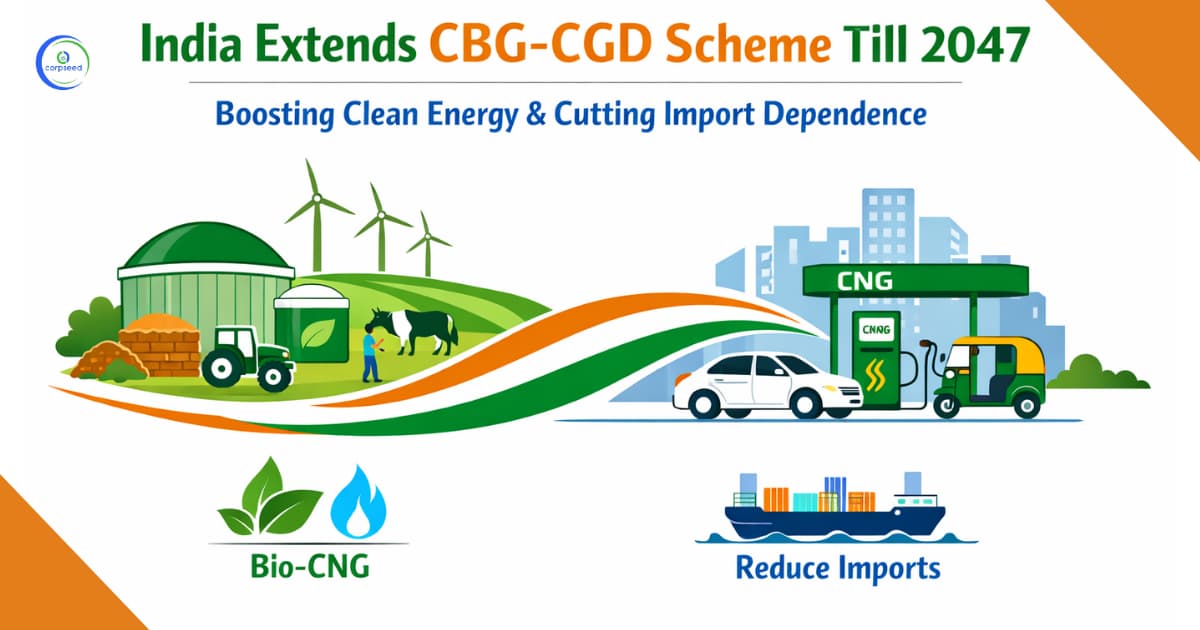
The Ministry of Petroleum and Natural Gas has extended the Compressed Biogas-City Gas Distribution (CBG-CGD) Synchronisation Scheme till December 31, 2047. The government has also expanded the scheme to allow direct injection of Compressed Biogas (CBG) into the national gas pipeline network. This is a major step toward making India less dependent on imported gas and building a stronger, cleaner energy future. The decision comes at a time when global energy supplies face serious pressure due to rising tensions in West Asia.
Why India Made This Move Now?
Global LNG (Liquefied Natural Gas) supplies are under stress. Geopolitical tensions in West Asia are disrupting energy trade routes. India currently imports nearly 47 percent of its LNG from Qatar, making it vulnerable to any supply shock. To reduce this risk, the government is pushing hard to develop domestic gas alternatives, such as CBG. Compressed Biogas is produced from organic waste and offers a clean, affordable, and locally available fuel source.
What the Expanded Scheme Offers?
The updated framework has several advantages. First, it allows the movement of CBG economically by means of the existing pipelines, which are costly in terms of heavy logistics. Second, it guarantees producers of CBG offtake, and therefore, they are assured to invest and produce even more. Third, it encourages equal prices throughout the gas distribution system. Fourth, it helps ensure that domestic PNG (Piped Natural Gas) connections and CNG (Compressed Natural Gas) for transport receive full and uninterrupted supply. Over 1.25 lakh new PNG connections have already been activated for domestic, commercial, and industrial consumers as part of demand-side action.
The Road Ahead for India's Energy Security
Senior Ministry official Sujata Sharma confirmed that the situation with supply is heavily monitored. There are no known shortages of LPG supply chains. The government is also regulating the supply of gas to industries and commercial consumers to cushion critical sectors. The extension to 2047 is a strong message that India is determined to create a robust, self-sustaining energy ecosystem based on alternatives that are produced in the country. This development of CBG as a part of the national gas grid will bring India nearer to its clean energy and net-zero aspirations and safeguard millions of its citizens against the consequences of worldwide fuel price crises.
About the Author

Mahek Sancheti
Content WriterMahek Sancheti, BAJMC graduate with a deep passion for writing. As a content writer, video content creator, creative content creator, and scriptwriter, I bring stories to life through words and visuals. I honed my skills by working with a prominent news agency, where I excelled in crafting compelling narratives and engaging content. Coming from a journalism and mass communication background I have skills to craft engaging narratives that captivate audiences. With a keen interest in writing and creativity, I aim to deliver impactful and meaningful content that resonates with diverse audiences.
https://www.linkedin.com/in/mahek-sancheti-837196212