
What is the Legal Difference Between an E-Waste Collector and a Recycler?
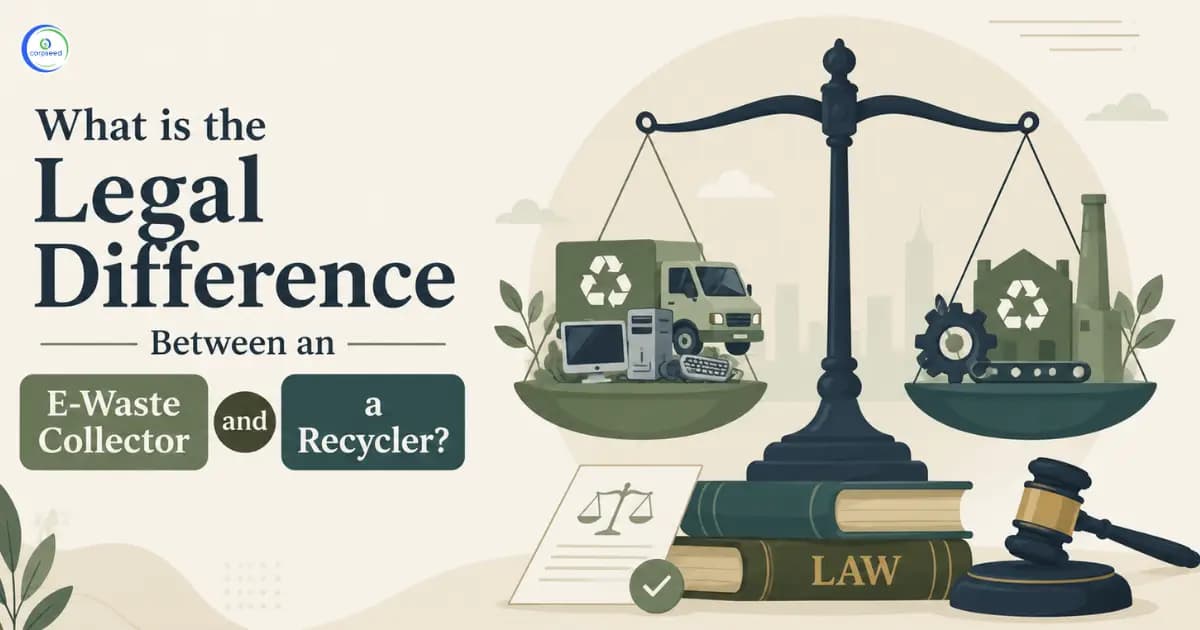
Under India's E-Waste (Management) Rules, 2022, e-waste collectors and e-waste recyclers perform distinct roles in the e-waste management ecosystem. An e-waste collector is responsible for collecting, aggregating, storing, and channelizing e-waste to authorized recyclers or refurbishers without carrying out material recovery or recycling operations.
Schedule a Call Back
2,000+ e-waste EPR assignments since 2018
Clients include Intangles Lab, Emerson Automation Solutions Intelligent Platforms, Deki Electronics, Amzetta Technologies, Alogic Electronics India, KWW Electricals & Electronics, Emerson Process Management (India), Lianchuang Electronic India, Q-Line Biotech, Genes 2ME, Sanrad Medical Systems, Agfa Healthcare India (12 of 850+ served since 2018).
A few more clients we've served in this industryHide the list
- Electronics and technology
- Intangles Lab · Emerson Automation Solutions Intelligent Platforms · Deki Electronics · Amzetta Technologies · Alogic Electronics India · KWW Electricals & Electronics · Emerson Process Management (India) · Lianchuang Electronic India
- Pharma and healthcare
- Q-Line Biotech · Genes 2ME · Sanrad Medical Systems · Agfa Healthcare India · Dental Tree Supply Company · Vital Sign Medidevices · Trivitron Healthcare · Radimage Healthcare India
- Engineering and manufacturing
- Juki India · Hilti India · Migatronic India · Bauer Equipment India · Aptiv Components India · Wacker Neuson Equipment · Franklin EV India
- Logistics and trade
- Siddhartha Logistics · Zenexpress Logistics · MOL Logistics (India) · Fibs Logistics India
- Food and consumer goods
- Milano Ice Cream · Milano22 Foods · Milano21 Foods
- Energy and power
- Eirmon Solar System · Spear Solar System · Bitek Solar · Nash Energy (I)
- More clients
- Cambro Nilkamal · M.C. Dean Systems India · Haesi GHL · Meditronix Corporation · Nash Industries (I) · Nilkamal · Franke Faber India · Alten India · Parswa Exports · Indicate Exim · Truetech Services · BitVoice Solutions · Heidelco Medicore · Trans Health Care India
Introduction
Under India's E-Waste (Management) Rules, 2022, an e-waste collector and an e-waste recycler are two legally distinct entities with entirely different authorisations, responsibilities, and compliance mandates.
An E-Waste Collector is permitted only to gather, store, and transport electronic waste to authorized dismantlers or recyclers. They are legally barred from processing or breaking down the waste.
An E-Waste Recycler is legally authorized to dismantle, process, end-treat, and recover raw materials (such as copper, plastics, and precious elements) from electronic waste.
Running without the appropriate CPCB permission or considering the above two positions to be identical would be an infraction, which is associated with hefty fines and makes EPR credits invalid.
Why This Distinction Matters to Your Business?
India is amongst the countries which produce some of the highest amounts of e-waste. The following are the reasons why the suppliers of electronics in India should be rigorously scrutinized by the Central Pollution Control Board (CPCB):
- Generation of EPR Credits: Extended Producer Responsibility (EPR) credits can be generated and traded only through authorized recyclers. The collectors cannot generate any EPR certificates.
- Compliance with Audits: Audits done by State Pollution Control Boards (SPCBs) will verify that your waste disposal vendors are working within their lawful purview.
- Liability: In case of using any unauthorized or incorrectly categorized vendors, the liability for both environmental and legal issues lies with you.
Schedule a Call Back
Who is an E-Waste Collector?
An e-waste collector is an individual or commercial business authorized solely to gather electronic waste from households, offices, or bulk consumers and safely store or transport it to the next stage of the recycling ecosystem.
Key Responsibilities of a Collector:
- Collecting e-waste from producers, bulk consumers, or public drop-off points.
- Storing collected e-waste safely to prevent environmental contamination before transport.
- Transporting waste exclusively to CPCB-authorized dismantlers or recyclers.
- Maintaining precise records of the quantities and sources of all collected waste.
- Operating under a valid registration from the relevant pollution control authority.
Who Is an E-Waste Recycler?
An e-waste recycler is authorized to handle the high-tech, asset-recovery phase of the waste cycle. Recyclers are legally permitted to dismantle, process, and extract valuable materials from electronic waste, such as copper, aluminium, engineered plastics, and precious metals like gold and silver found on circuit boards.
By the same analogy, while the collector is the messenger, the recycler is the factory. The factory breaks down the package into raw parts and processes them into reusable raw materials. Since this stage requires the handling of toxic materials such as lead, mercury, and cadmium, it is subject to much more rigorous environmental regulation.
Key Duties of a Recycler:
- Disassembly and processing of e-waste in an environmentally sound manner as prescribed by the state.
- Recycling of fractionated materials.
- Handling and disposing of hazardous chemical components according to strict SPCB rules.
- Issuing valid recycling certificates to fulfill Extended Producer Responsibility (EPR) targets.
- Operating under explicit, technology-specific recycling authorizations.
Legal and Regulatory Differences at a Glance
| Regulatory Aspect | E-Waste Collector | E-Waste Recycler |
| Primary Activity | Collects, aggregates, stores, and transports waste. | Dismantles, treats, processes, and recovers raw materials. |
| CPCB Portal Status | Registered as a collection center/agent. | Registered as an official, end-tier Recycler. |
| Processing Rights | Strictly prohibited from dismantling or breaking down waste. | Legally Authorized to chemically and physically process waste. |
| EPR Credit Authority | Cannot generate or issue EPR compliance credits. | Legally empowered to generate and trade EPR credits. |
| Oversight Focus | Monitored for safe storage, leakage prevention, and logistics. | Monitored for air/water emissions and safe hazardous waste disposal. |
| Primary Output Docs | Collection receipts, manifest logs, and transport records. | Official Recycling Certificates and material recovery reports. |
How to Stay Compliant When Working with E-Waste Vendors?
To protect your business from supply chain liability, establish this five-step compliance routine:
- Verify CPCB Authorization Proof: Always request valid CPCB or SPCB registration certificates before onboarding any waste management vendor.
- Verify the Correct Registration Category: Verify whether the vendor is actively registered on the official online portal, such that its physical activities align with its legal registration (Collector or Recycler).
- Maintain the Documentation Trail: Keep an uninterrupted paper trail of all documentation relating to the collection, transportation, and recycling process.
- Audit the Source of Your EPR Credits: Ensure your EPR credits are generated only through properly authorized recyclers, not middleman collectors.
- Schedule Periodic Reviews: Regularly double-check that your vendors' environmental authorizations remain valid and have not expired or been suspended.
Conclusion
The legal distinction between an e-waste collector and a recycler is one of the most crucial distinctions for operation, as it directly determines your business’s compliance, safety, environmental impact, and the success of your EPR programs. Collectors gather the waste; recyclers reprocess the waste to put it back into use.
Let us help you avoid problems caused by mistakes in vendor documentation. Get in touch with the environmental compliance specialists at Corpseed now to review your existing e-waste vendors and create an EPR-compliant and audit-safe procedure.
About the Author

Anshika Jindal
Content WriterAnshika Jindal, a Legal Content Writer with strong expertise in legal research and a solid academic background in BA LLB and LLM (Criminal Law). I specialize in researching statutes, case laws, and legal developments and presenting them in clear, accurate, and engaging written content. With strong analytical skills and attention to detail, I create reliable, well-structured legal content while maintaining professional and ethical standards.
I specialize in conducting in-depth legal research using credible sources and presenting legal information in a structured, reader-friendly manner while maintaining precision and authenticity. My work focuses on simplifying legal language without compromising its meaning, making legal content accessible to a wider audience.
Related articles
CPCB SOP 2026 for CTE and CTO Approvals - Timelines, Inspections and Key Directions
2026-10-30
E-Waste EPR for Electronics Brands: Registration, Targets & Annual Compliance
2026-10-26
Battery EPR Registration: Who Needs It Under the Battery Waste Management Rules?
2026-10-26
Detailed Project Report for CTE and CTO: Requirements, Format, Documents and Approval Process
2026-10-22
EPR Registration in India: Who Needs It and Which EPR Category Applies to Your Business?
2026-10-21
CPCB Guidelines on Levy of Fees Under the Solid Waste Management Rules, 2026
2026-10-07