9311255283
×

Welcome to Corpseed. Please type your query, and we shall provide immediate assistance.

×

NABL Revises Medical Imaging Accreditation Standards

NABL_Revises_Medical_Imaging_Accreditation_Standards_Corpseed.webp
Last updated : 2026-01-08

Medical imaging plays an important role in the modern healthcare sector. Accurate imaging helps doctors in detecting, monitoring and guiding for diseases for proper treatment. To ensure safety, quality, and reliability, medical imaging facilities must follow strict standards.
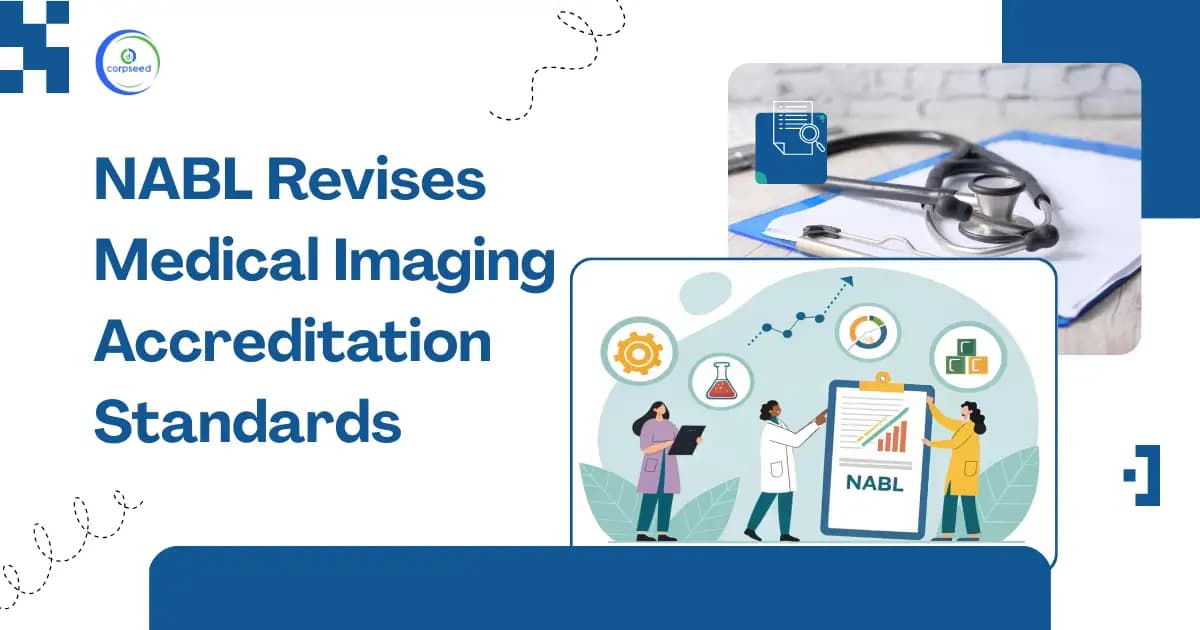
In India, the National Accreditation Board for Testing and Calibration Laboratories (NABL) manages accreditation for medical imaging facilities. NABL released the Amendment on 05 January 2026. This amendment aligns medical imaging accreditation with ISO 15189:2022 standards.

What are Medical Imaging CABs (MI-CABs)?

Medical Imaging Conformity Assessment Bodies (MI-CABs) refer to establishments that undertake medical imaging, ensuring adherence to quality to guarantee the results achieved through these processes. These consist of specialised imaging units, independent diagnostic centres, and hospital imaging departments. NABL evaluates and accredits MI-CABs to verify that they adhere to global standards such as ISO 15189:2022, which cover both technical proficiency and quality control systems. They manage imaging services like: 

  • X-Ray and Fluoroscopy
  • Ultrasound and Doppler
  • MRI (Magnetic Resonance Imaging)
  • CT and CBCT (Computed Tomography)
  • Nuclear Medicine (PET, SPECT, PET-CT, PET-MRI)

--------------Blog Contact Form-------------

Key Regulatory Changes Introduced in Amendment 04

Focused regulatory updates for Medical Imaging Conformity Assessment Bodies are introduced by Amendment 04 of NABL 135, which was released in January 2026. In keeping with global best practices, the modifications improve patient safety, reporting dependability, and system accountability.

  • Mandatory Adoption of ISO 15189:2022

All references to ISO 15189:2012 have been fully removed. MI-CABs must now comply only with ISO 15189:2022, which emphasizes risk-based thinking, patient safety, process control, error prevention, and continuous quality improvement across imaging operations.

  • Uniform Scope Across Imaging Modalities

The amendment clearly applies to all diagnostic imaging services, ensuring one consistent quality management system. Covered modalities include X-Ray, Ultrasound, MRI, CT/CBCT, and Nuclear Medicine such as PET, SPECT, PET-CT, and PET-MRI.

  • Strengthened Professional Accountability

The term “Authorized Signatory” is replaced with “personnel responsible for the report, review, and release of results.” This clarification clearly assigns responsibility for report validation and release, supporting clinical governance and accountability.

  • Regulatory Significance

These updates bring NABL accreditation in line with international norms, promote a patient-centric approach, and ensure increased confidence in the results of tasks performed in the medical imaging sector.

Progressive Development of NABL 135 (2019–2026):

NABL 135 has undergone continuous refinement since its introduction to ensure medical imaging accreditation remains aligned with global standards and national healthcare policies. Each amendment reflects NABL’s focus on quality assurance, patient safety, and regulatory clarity.

  • Amendment 01 (2019): Technical Streamlining

This amendment removed selected text sections after an internal technical review. The objective was to eliminate ambiguity and improve the clarity of accreditation requirements.

  • Amendment 02 (2020): Policy-Driven Alignment

The legal identity of Medical Imaging CABs was aligned with NABL 131, and the mandatory four-day training requirement was removed. This change shifted the focus from fixed training duration to demonstrated competence.

  • Amendment 03 (2024): Introduction of ISO 15189:2022

References to ISO 15189:2022 were introduced following the release of the updated international standard. This amendment initiated the transition toward stronger risk management and patient-centric quality systems.

  • Amendment 04 (2026): Mandatory Standard Migration

All references to ISO 15189:2012 were removed entirely. Compliance with ISO 15189:2022 became mandatory, marking a full transition to the latest global requirements for medical imaging accreditation.

Impact of Amendment 04 on Medical Imaging CABs (MI-CABs)

Amendment 04 directly affects how MI-CABs operate daily. Major impacts include:

  • Clear definition of imaging categories (A to F)
  • Mandatory appointment of qualified personnel
  • Strong internal audit and quality monitoring systems
  • Improved patient identification and safety procedures
  • Strict rules for handling contrast agents and radiopharmaceuticals
  • Clear guidelines for reporting critical findings
  • Secure information management systems
  • Defined procedures for interim and revised reports

Implementation Timeline and Compliance Requirements

Amendment 04 took effect on 05 January 2026, and all Medical Imaging Conformity Assessment Bodies have to comply from that date. Facilities must revisit the existing quality management system, update standard operating procedures with changes corresponding to ISO 15189:2022, and train the staff regarding changes in the requirements. Stringent risk management plans must be in place; the equipment calibration must be valid, exact records and internal audits need to be performed. 

Referral arrangements and service agreements are also supposed to be updated on time to express current compliance needs. NABL assessments look at both management systems and technical performance, and compliance must be sustained rather than a point-in-time exercise. Accreditation pertains only to premises approved by NABL and is absolutely non-transferable.

Conclusion

NABL 135 Amendment 04 (2026) sets a higher benchmark for medical imaging quality in India. It ensures safer imaging, accurate reports, and better patient care. By aligning with ISO 15189:2022, NABL strengthens global acceptance of Indian medical imaging facilities. MI-CABs that follow these standards gain credibility, reduce risks, and improve service quality. Compliance with NABL 135 is not only about accreditation. It reflects a commitment to excellence, safety, and trust in medical imaging services.

This portion of the site is for informational purposes only. The content is not legal advice. The statements and opinions are the expression of author, not corpseed, and have not been evaluated by corpseed for accuracy, completeness, or changes in the law.

BOOK A FREE CONSULTATION

Get help from an experienced legal adviser. Schedule your consultation at a time that works for you and it's absolutely FREE.

Author

Mahek Sancheti, BAJMC graduate with a deep passion for writing. As a content writer, video content creator, creative content creator, and scriptwriter, I bring stories to life through words and visuals. I honed my skills by working with a promi...

Learn More >>