
CDSCO Approval for Imported Medical Devices: End-to-End Process
Obtaining CDSCO approval for imported medical devices in India requires strict adherence to the Medical Devices Rules, 2017. Importers and authorised Indian agents must determine the correct risk-based classification (Class A to D) and submit Form MD-14 through the official online portal to secure an MD-15 import licence. The document-heavy process requires key technical files, including a Power of Attorney, Device Master File, Plant Master File, and Free Sale Certificate. Understanding classification, fee structures, timelines, and post-approval labelling compliance ensures a seamless regulatory journey and prevents operational delays.
Schedule a Call Back
2,100+ CDSCO medical device assignments since 2018
Clients include Endolite India, Mankind Pharma, Ossur India, ADK Health Care, Credence Prosthetic India, V2U Physio Asia, International Electro Medical Company, Radimage Healthcare India, Istok New Hearing AID, Simpladent Implant Solutions, Starkey Laboratories India, Gentec Medical (12 of 1,100+ served since 2018).
A few more clients we've served in this industryHide the list
- Pharma and healthcare
- Endolite India · Mankind Pharma · Ossur India · ADK Health Care · Credence Prosthetic India · V2U Physio Asia · International Electro Medical Company · Radimage Healthcare India · Istok New Hearing AID · Simpladent Implant Solutions · Starkey Laboratories India · Gentec Medical · Cureesse Pharma · Hygiene Medicus · Nexus Surgical and Medicare
- More clients
- Meditronix Corporation · Nilkamal · Haesi GHL · GHL · Servotech Power Systems · Elektrocraft India · Happy Medicare · Anantaa Gsk Innovations · Cogmac Technologies · Aficionados Tech · Superceuticals · Truevis Technologies · 1008 Digital Health · BDS Services · Evoq Imaging Technologies · Premier Medical Systems and Devices · Riransa · Vitrag Infra Projects · Insta Biotech · Digital Acoustics · Artificial Learning Systems India · Nfilade Security Solutions · Humors Tech · K2O Consulting
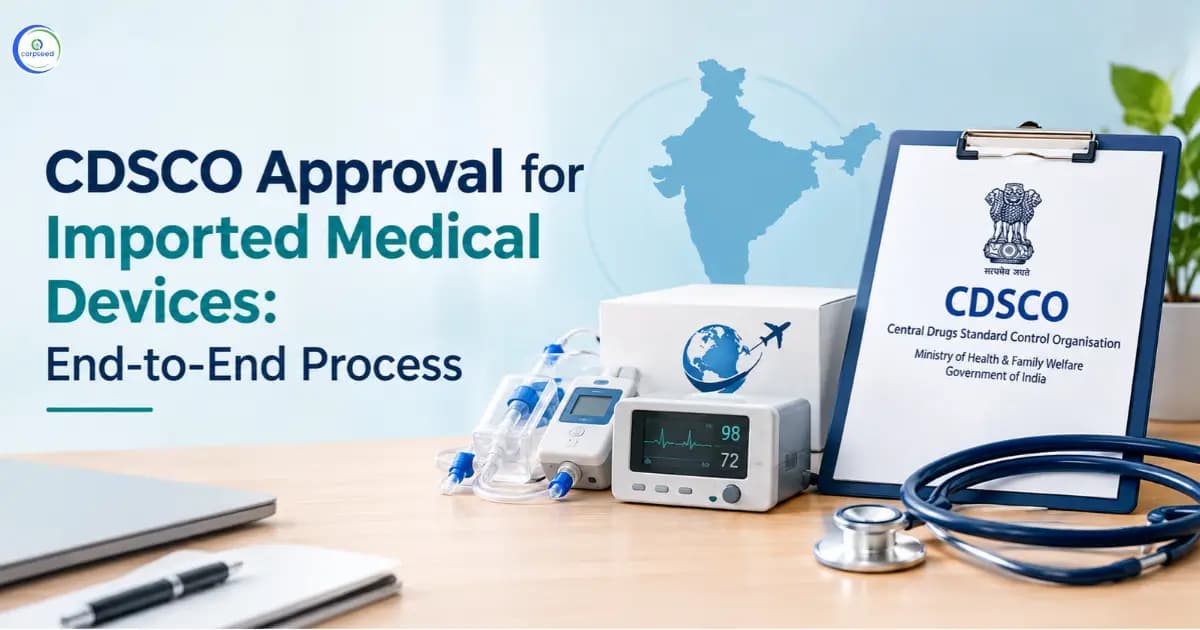
Importing a medical device into India involves more than arranging shipment, paying customs duties, and bringing the product into the country. Medical devices are regulated products, and businesses must follow the requirements prescribed under the Medical Devices Rules, 2017 (MDR 2017) and the regulatory framework administered by the Central Drugs Standard Control Organisation (CDSCO).
For a standard commercial import of regulated medical devices, the importer or authorised Indian agent generally applies in Form MD-14 through the CDSCO online medical-device system to obtain an import licence in Form MD-15. CDSCO follows a risk-based classification system under which medical devices are broadly placed in Class A, Class B, Class C or Class D.
However, there is no single checklist that works for every imported device. The requirements can change depending on the product, risk class, intended use, manufacturing site, regulatory history, and whether the product is an in-vitro diagnostic (IVD).
This makes CDSCO approval for imported medical devices a document-heavy regulatory process. Getting the classification and manufacturer documents right before filing can save considerable time later.
This guide explains the CDSCO medical device registration process, documents, eligibility, fees, timeline, MD-14 application, MD-15 import licence, IVD requirements, post-approval compliance, and common reasons for regulatory queries.
What Is CDSCO Approval for Imported Medical Devices?
CDSCO approval for imported medical devices refers to the regulatory permission required to legally import applicable medical devices into India under the Medical Devices Rules, 2017.
CDSCO is India's national regulatory authority for medical devices. Under the MDR 2017 framework, medical devices are classified according to risk:
- Class A- Low risk
- Class B- Low-moderate risk
- Class C- Moderate-high risk
- Class D- High risk
The classification is important because it determines the regulatory requirements applicable to the product.
For the standard import-licence route, the applicant submits Form MD-14, while the licence is granted in Form MD-15. CDSCO's official medical-device page specifically identifies this MD-14 to MD-15 process for importing medical devices.
There is an important exception for certain Class A non-sterile and non-measuring medical devices, which were exempted from the licensing regime through an amendment to the Medical Devices Rules. The applicable registration, labelling, and other requirements should still be checked before importing such products.
So, before starting a CDSCO medical device registration application, an importer should first establish exactly which regulatory route applies to the product.
Schedule a Call Back
Who Needs CDSCO Approval to Import Medical Devices in India?
Businesses importing regulated medical devices for commercial purposes generally need to follow the applicable CDSCO import requirements.
This can include:
- Indian medical device importers
- Authorised Indian agents of overseas manufacturers
- Medical device distributors
- Healthcare product companies
- Importers of surgical equipment
- Importers of diagnostic equipment
- Importers of implantable devices
- Importers of hospital equipment
- Importers of regulated IVD products
Medical Device Risk Classification Under CDSCO
Risk classification is one of the most important stages in the CDSCO approval process for imported medical devices.
Under the Medical Devices Rules, 2017, medical devices are classified into four broad categories:
Risk Class General Risk Level
| Class A | Low risk |
| Class B | Low-moderate risk |
| Class C | Moderate-high risk |
| Class D | High risk |
The classification depends upon the regulatory requirements and the attributes of the device. It should not be considered that it would be feasible to classify the device in India depending on its commercial name or that the classification assigned in another country shall automatically apply to India.
The CDSCO online system currently provides a facility for submitting applications for risk classification of medical devices, available from 27 November 2025. A separate provision for risk classification of IVDs became available from 18 February 2026. For businesses unsure about classification, resolving this question before the main import application is often much more efficient than correcting the application after submission.
What Is Form MD-14 and Form MD-15?
These two forms are central to the standard CDSCO medical device import licence process.
Form MD-14
Form MD-14 is the application submitted for obtaining an import licence for medical devices.
The applicant provides information relating to the:
- Indian authorised agent/importer
- Overseas manufacture
- Manufacturing site
- Medical device
- Device classification
- Product variants
- Regulatory certificates
- Technical documentation
- Labelling and instructions for use
- Form MD-15
Form MD-15 is the import licence granted by the Central Licensing Authority after the application satisfies the applicable regulatory requirements.
In simple terms:
- MD-14 = Application
- MD-15 = Import Licence
This distinction is important because businesses sometimes refer generally to “MD-14 registration” or “MD-15 registration” when they actually mean the application and licence stages.
CDSCO's official medical-device guidance confirms that the applicant makes an application in MD-14 for the grant of an import licence in MD-15.
Documents Required for CDSCO Medical Device Import Licence
Documentation is one of the most important parts of the CDSCO registration for medical devices process.
The exact document set depends on the product and circumstances, but the CDSCO import-licence checklist includes documents such as:
- Covering letter
- Form MD-14
- Applicable fee challan
- Power of Attorney from the overseas manufacturer
- Undertaking from the authorised agent
- Applicable wholesale/manufacturing licence or Form MD-42 registration
- Manufacturer and manufacturing-site details
- Free Sale Certificate or Marketing Authorisation, where applicable
- Quality Management System certificate
- Applicable regulatory or quality certificates
- Manufacturer's Declaration of Conformity
- Plant Master File
- Device Master File
- Product specifications
- Product variants and accessories
- Labels
- Instructions for Use
- Design and manufacturing information
- Applicable performance and safety information
The CDSCO checklist explicitly mentions the Power of Attorney, regulatory certificates, quality certificates, Declaration of Conformity, Plant Master File, and Device Master File among the documents required for obtaining import licenses.
Step-by-Step CDSCO Approval Process for Imported Medical Devices
The CDSCO medical device import process can be divided into several practical stages.
Step 1: Identify the Product and Its Intended Use
Start with the actual product.
- Review
- Product name
- Intended use
- Indications
- Mode of action
- Duration of use
- Whether it is invasive
- Whether it is sterile
- Whether it performs a measuring function
- Whether it is software
- Whether it is an IVD
This information helps determine how the product should be treated under the Indian regulatory framework.
Step 2: Determine the Risk Classification
The next step is to identify whether the product is Class A, B, C, or D. Where the classification is unclear, the applicant should use the applicable CDSCO classification mechanism instead of making an unsupported assumption. The current CDSCO online system specifically provides a risk-classification application facility for medical devices.
Step 3: Check Whether a Licensing Exemption Applies
Certain Class A non-sterile and non-measuring devices have been exempted from the licensing regime. However, exemption from a particular licensing requirement should not be interpreted as complete exemption from medical-device regulation. The business should still verify applicable registration, labelling, quality, and other requirements under the current framework. CDSCO maintains the relevant exemption notification under its Medical Devices Rules resources.
Step 4: Appoint an Authorised Indian Agent
For an overseas manufacturer entering the Indian market, an appropriate authorised Indian agent is an important part of the regulatory structure. CDSCO defines an authorised agent as a person, firm or organisation appointed by an overseas manufacturer through a Power of Attorney to undertake the import of medical devices in India. The Power of Attorney must meet the prescribed requirements and should be carefully prepared before submission.
Step 5: Collect Documents From the Overseas Manufacturer
The Indian applicant should obtain the technical and regulatory documents from the manufacturer.
These can include:
- Plant Master File
- Device Master File
- Free Sale Certificate
- Marketing Authorisation
- Quality Management System certificate
- Declaration of Conformity
- Labels
- IFU
- Product specifications
- Regulatory approvals
- Manufacturing-site details
- Applicable performance and safety documentation
The documents should be reviewed for consistency before uploading them.
Step 6: Arrange the Importer's Regulatory Details
The applicant should ensure that its own regulatory documents are in place.
This can include the applicable:
- IEC
- Wholesale licence
- Manufacturing licence, where applicable
- Form MD-42 registration, where applicable
- Constitution documents
- Authorised-agent details
The current CDSCO online medical-device portal specifically instructs applicants to add their IEC details before applying for import licences, as the IEC is mandatory to proceed with such applications.
Step 7: Create or Update the CDSCO Online Account
The application is submitted through the online medical-device system. The applicant should ensure that the account information, organisation details, IEC, and other required information are correctly entered before beginning the application.
Step 8: Prepare and File Form MD-14
The applicant then prepares Form MD-14.
This stage requires careful attention to:
- Manufacturer details
- Manufacturing-site details
- Device name
- Device model
- Classification
- Variants
- Regulatory certificates
- Product documentation
- Labelling
- Intended use
The information entered in the form should match the supporting documents.
Step 9: Pay the Applicable Government Fee
The prescribed government fee must be paid as part of the application process. The amount can vary according to the applicable regulatory provisions and the nature/risk class of the device or manufacturing site. CDSCO's FAQ notes that the applicable fee under the Second Schedule depends on the risk class where devices from multiple risk classes are involved. Because fee provisions can change, applicants should verify the applicable fee at the time of filing instead of relying on an old article or third-party fee table.
What Is the Cost of CDSCO Approval for Imported Medical Devices?
The CDSCO medical device registration cost is not necessarily the same for every product.
The overall expense can involve:
- Government application fees
- Applicable manufacturing-site fees
- Documentation and certification expenses
- Notarisation or authentication costs, where applicable
- Testing or evaluation costs, where applicable
- Professional consultancy charges
The government fee should be checked against the applicable provisions of the Second Schedule of the Medical Devices Rules, 2017 at the time of filing. Businesses should also distinguish between the official CDSCO fee and a consultant's professional fee. They are separate costs. For this reason, a reliable CDSCO registration consultant in India should first assess the product, classification, manufacturer, and regulatory route before providing a complete cost estimate.
How Long Does CDSCO Approval Take?
Businesses planning an import often want to know the CDSCO medical device approval timeline before placing an order with the overseas manufacturer. Under the CDSCO FAQ, the timeline stated for grant of an import licence in Form MD-15 is nine months, provided the documents are found satisfactory. CDSCO also notes that the Licensing Authority may inspect an overseas manufacturing site before or after grant of the import licence when required. This should not be interpreted as a guaranteed approval period for every application.
The practical timeline can be affected by:
- Incorrect classification
- Missing documents
- Incomplete technical files
- Deficiencies in the application
- CDSCO queries
- Delayed responses
- Manufacturer-document issues
- Changes to the manufacturing site
- Additional regulatory requirements
- Inspection, where required
Therefore, businesses should begin regulatory preparation well before the planned commercial import date.
When Can a CDSCO Import Application Face Delays?
There are several practical reasons why a CDSCO medical device import licence application may take longer than expected.
- Incorrect classification- If the device classification is incorrect, the application may need clarification or correction.
- Inconsistent manufacturer information- Differences in the legal manufacturer's name or address across documents can raise questions.
- Incomplete Device Master File- The technical file must contain the applicable information required under the regulatory framework.
- Missing regulatory certificates- Free Sale Certificates, Marketing Authorisations, or quality certificates may be required depending on the application.
- Incorrect Power of Attorney- The authorisation from the overseas manufacturer should meet the prescribed requirements.
- Label and IFU mismatch- Product labels, Instructions for Use and technical documentation should tell the same story.
- Poor response to queries- A vague response can lead to further clarification requests.
CDSCO Approval for Imported IVD Medical Devices
In-vitro diagnostic medical devices have specific regulatory requirements under the Medical Devices Rules. CDSCO states that the Central Licensing Authority is responsible for enforcement relating to the import of all classes of IVD medical devices. The standard commercial import route also uses Form MD-14 for the application and Form MD-15 for the import licence.
IVDs are also classified into:
- Class A
- Class B
- Class C
- Class D
The documentation can include product-specific performance information and other technical material relevant to IVDs. It is therefore better to treat an IVD application separately rather than simply copying a conventional medical-device application. For certain activities such as clinical investigation, testing, evaluation, demonstration or training, separate regulatory routes and forms may apply. CDSCO's IVD guidance identifies MD-16/MD-17 for the relevant test-import route.
Labelling Requirements After CDSCO Approval
Obtaining an import licence does not mean that compliance stops. Medical devices placed on the Indian market must continue to comply with applicable labelling requirements. Depending on the product, the label and accompanying information can involve details such as:
- Device name
- Manufacturer information
- Importer information
- Manufacturing-site information
- Import licence number
- Batch or lot information
- Manufacturing date
- Expiry date, where applicable
- Storage conditions
- Warnings and precautions
- Instructions for Use
The exact labelling requirements should be checked against the applicable device and current regulatory provisions.
Post-Approval Compliance for Medical Device Importers
A CDSCO import licence for medical devices should not be treated as a one-time filing.
The licence holder or authorised agent may need to manage continuing regulatory obligations, including:
- Maintaining approved product information
- Managing changes to the device
- Updating manufacturing-site information
- Maintaining technical documentation
- Monitoring product safety
- Handling post-market issues
- Maintaining applicable quality documentation
- Managing regulatory correspondence
- Reporting applicable adverse events or safety concerns
This is why businesses entering the Indian medical-device market should think beyond obtaining the initial licence.
Why Choose Corpseed for CDSCO Medical Device Registration?
For a medical device importer, regulatory compliance involves coordination between the Indian business, overseas manufacturer, and regulatory authority. Corpseed can support businesses through the different stages of the process rather than treating the application as a simple form-filling exercise.
Our support can cover:
Product assessment → classification → document checklist → manufacturer-document review → MD-14 preparation → online filing → regulatory query support → MD-15 assistance → post-approval compliance
The objective is to help businesses approach the application with the right documents and a clear understanding of the applicable regulatory requirements. If you are planning to import medical devices into India, getting the regulatory route checked before placing a commercial order can help prevent avoidable compliance problems later.
Final Takeaway
The CDSCO approval process for imported medical devices begins before the MD-14 application is submitted. The importer should first understand the product, identify its Indian risk classification, confirm whether a licensing exemption applies, appoint the appropriate authorised Indian agent, and collect the necessary manufacturer documents.
For the standard commercial import route, the process generally moves from Form MD-14 application to Form MD-15 import licence. However, obtaining the licence is only one part of medical-device compliance. Labelling, product changes, manufacturing-site changes, technical documentation, and post-market obligations also need attention. For businesses importing medical devices for the first time, getting the regulatory route and documentation reviewed before filing can reduce avoidable delays and regulatory queries.
Planning to import a medical device into India? Get professional assistance with CDSCO classification, documentation, MD-14 filing, and MD-15 import licence support through Corpseed.
About the Author

Anshika Jindal
Content WriterAnshika Jindal, a Legal Content Writer with strong expertise in legal research and a solid academic background in BA LLB and LLM (Criminal Law). I specialize in researching statutes, case laws, and legal developments and presenting them in clear, accurate, and engaging written content. With strong analytical skills and attention to detail, I create reliable, well-structured legal content while maintaining professional and ethical standards.
I specialize in conducting in-depth legal research using credible sources and presenting legal information in a structured, reader-friendly manner while maintaining precision and authenticity. My work focuses on simplifying legal language without compromising its meaning, making legal content accessible to a wider audience.
Related articles
CDSCO MD-7 Endorsement for Medical Devices: A Practical Guide for Manufacturers
2026-10-23
CDSCO Export NOC for r-DNA Products: Who Needs It?
2026-10-21
CDSCO Registration: A Simple Guide to Getting Your License in India 2026
2026-10-21

Importing Cosmetic Gift Sets into India? CDSCO, LMPC & Labelling Checklist
2026-10-14
CDSCO Medical Device Registration Consultant
2026-09-23
CDSCO Registration for Lab Equipment and Diagnostic Devices
2026-09-22