As the world moves towards sustainable energy and zero-waste living, biogas plants in India have emerged as one of the most practical and eco-friendly solutions. Often referred to locally as Gobar gas plants, these systems convert organic matter such as animal dung, agricultural residue, kitchen waste, and municipal bio-waste into a renewable fuel, biogas, and an organic fertilizer, slurry, through anaerobic digestion. The extensive and aggressive consumption of our limited natural resources will only lead to climate change, biodiversity loss, species extinction, and rising global temperatures.
What Is A Biogas Plant?
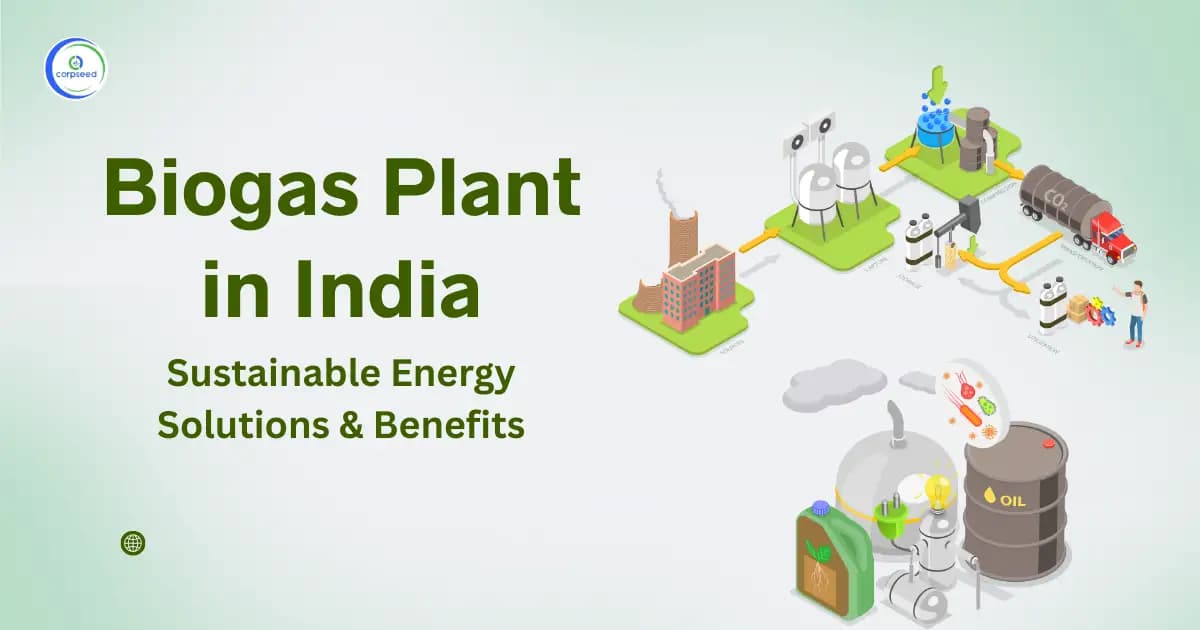
A biogas plant is a facility where organic matter, such as kitchen scraps, food waste, agricultural residues, and animal dung, is decomposed by microorganisms in an oxygen free (anaerobic) environment to produce biogas and a nutrient-rich byproduct called digestate. The output comes in two forms: first, biogas, i.e., methane-rich fuel used for cooking, heating, and electricity generation; and second, organic slurry, a nutrient-rich bio-fertiliser that improves soil health. This is the most straightforward technique for solving waste management problems while reducing dependence on fossil fuels.
Table of Contents
--------------Blog Contact Form-------------
Importance Of Biogas Plant In India
Below is the reason why the biogas plant in India is essential-
Economic and energy Benefits
- Renewable energy source: Biogas provides a renewable alternative to LPG, kerosene, and fossil fuels.
- Energy Security: Particularly in rural areas, biogas plants reduce dependence on commercial fuels.
- Cost savings: By using biogas, households and institutions save on fuel and electricity bills.
Environmental Benefits
- Methane Mitigation: Rather than emitting methane into the atmosphere through natural decomposition, biogas plants in India capture it for use, reducing greenhouse gas emissions.
- Waste Management: Converts organic waste into valuable energy and fertilizer, reducing landfill pressure.
- Footprint of Lower carbon: Use of biogas instead of fossil fuels cuts down carbon emissions.
- Agriculture Impact: The digestate from biogas plants is high-quality organic fertilizer that improves soil health and reduces dependence on chemical fertilizers.
Equipment Required To Set Up A Biogas Plant In India
Below are the following equipment and machinery used for setting up a biogas plant in India.
- Road Weighbridge for weight
- Slurry preparation tank
- Digester with Double Membrane
- Agitators and Pumps
- Purification System
- Methane Compressor
- Receiver
- Gas Storage Tank
- Overflow Tank
- Pressure regulators
Documents Required For Biogas Or Gobar Gas Plant Setup In India
The solid waste management authorization can be obtained by applying along with the following documents, which are given below-
- Site Clearance from the local authority.
- Copy of Environmental Clearance
- Certificate of Consent to Establish (CTE)
- Certificate of Consent to Operate (CTO)
- Details regarding the expected returns from plants
- Land ownership documents
- District-level site selection committee
- Annual report
- Process flow diagram
- PESO (Petroleum and Explosives Safety Organization) license
Cost And Fee For The Biogas Plant In India
The cost and fees for setting up a biogas plant in India depend on two significant factors: capacity and materials used. Cost can vary from Rs 10,000 to Rs 25 lakhs. A biogas plant in India can be installed on the terrace or at the back of the complex.
Challenges And Limitations Of Biogas Plant In India
Despite many benefits, biogas technology in India faces several challenges, which are as follows-
- Initial Investment Costs: Setting up larger biogas plants in India requires significant capital investment, which can be a barrier without subsidies.
- Feedstock Availability: For continuous biogas production, consistent, high-quality organic waste input is critical.
- Technical Knowledge and Maintenance: Proper operations require trained personnel to maintain digester conditions and avoid production issues.
- Local Acceptance: Smell or perceived nuisance can lead to protests if poorly designed or located near residential areas.
Conclusion
In conclusion, Biogas plants from traditional gobar gas plants to modern community biogas and CBG facilities, play an essential role in the sustainable energy and waste management landscape. They not only harness organic waste to produce renewable energy but also improve sustainability of environment and agricultural practices. By widely embracing biogas technology, India can move closer to its renewable energy goals and create cleaner, greener communities across the Country.
FAQ`s
A biogas plant in India converts organic waste into biogas for cooking, power, or fuel, and into slurry for organic manure.
Biogas plant setup involves various factors, including site selection, availability of raw materials, plant construction, gas pipeline installation, and commissioning.
Biogas plant installation cost in India typically ranges from Rs. 10,000 for small household plants to Rs. 25 lakh or more for commercial biogas plants, depending on capacity.
Construction of a biogas plant includes excavation, construction of the digester tank (brick, RCC, or prefabricated), inlet and outlet chambers, installation of the gas holder, and setup of the slurry pit.
Yes, the biogas plant business is profitable in India due to government subsidies, rising demand for renewable energy, low operating costs, and multiple revenue streams.
This portion of the site is for informational purposes only. The content is not legal advice. The statements and opinions are the expression of author, not corpseed, and have not been evaluated by corpseed for accuracy, completeness, or changes in the law.
BOOK A FREE CONSULTATION
Get help from an experienced legal adviser. Schedule your consultation at a time that works for you and it's absolutely FREE.