
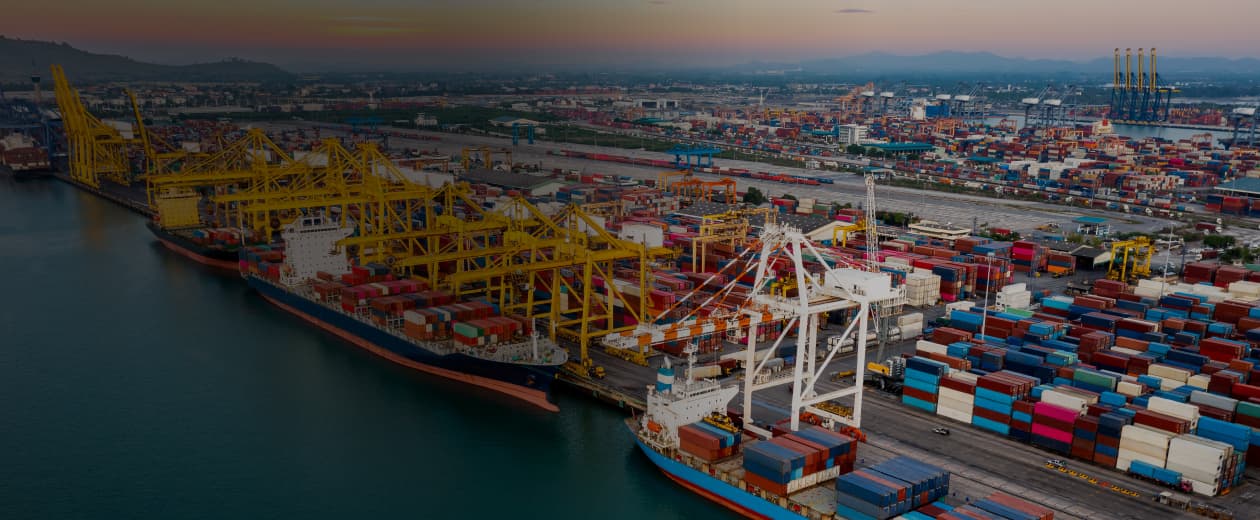
Ports & Shipping
The ports and shipping industry is crucial for global trade, facilitating the transport of goods across oceans through a network of ports and shipping lines. It is evolving rapidly with advancements in technology, increased focus on sustainability, and adaptation to changing global trade patterns.

Schedule a Call Back
Businesses we've worked with in ports and shipping
Showing 322 clients- Clients include
- Siddhartha Logistics · Siddhartha Logistics Ftwz · Yusen Logistics (India) · 20Cube Logistics Solutions · Zenexpress Logistics · MOL Logistics (India) · Fibs Logistics India · Shamraj Logistics · G Unit Logistics (India) · Jetz Global Logistics · Pathways Cargo India · Solankili Logistics Management · Adani Logistics · 23North Logistics Solutions · Airsurge Logistics · AS Shipping & Logistics · ATG Freight India · Dipti Warehousing · Ksquare Global Logistics · Saap Logistics · Shamcor International Logistics · V.R. Logistics · +19 more























Industries
Recycling & Waste Management
Recycling is an essential part of waste management. It helps to conserve natural resources, reduce landfill waste, conserve energy, and crea...
KNOW MORE ›Trading Business
Trade of a business reflects the value of services exchanged between domestic and foreign economic members, including the value of services ...
KNOW MORE ›Chemicals
There has been a global shift towards Asia as the world’s chemical manufacturing hub lately. The future of the chemical industry in India de...
KNOW MORE ›How to Setup Ports and Shipping Industry in India
The ports and shipping industry is a cornerstone of global trade, responsible for the transportation of goods across the world's oceans and waterways. This sector encompasses the operation of ports, the management of shipping routes, the logistics of cargo handling, and the regulatory framework that governs maritime activities. As international trade continues to expand, the industry faces both opportunities and challenges, driven by technological advancements, environmental concerns, and evolving global trade dynamics. This comprehensive overview explores the key components, current trends, challenges, and future directions of the ports and shipping industry.
Key Components of the Ports and Shipping Industry
Ports
- Commercial Ports: Key freight-handling centres that include container ports, bulk cargo terminals, and general cargo facilities. They facilitate the import and export of goods and form a cogwheel of global supply chains.
- Dry Ports: Inland facilities acting as an extended arm of the seaports offering services related to container storage, customs clearance, and distribution. This relieves congestion at the seaports and facilitates inland transportation.
- Specialised Ports: These are individually cited ports, which deal exclusively with specific cargo types. Examples include oil terminals, cruise ship terminals, and fishing ports. They help in fulfilling specific industry requirements and the development of the regional economy.
Shipping Lines
- Container Shipping: Involves the transportation of goods in standardized containers, enabling efficient loading, unloading, and transfer between different modes of transport.
- Bulk Shipping: Includes the transportation of bulk commodities like oil, coal, grains, and minerals. Bulk carriers are designed for large volumes and often operate on long-haul routes.
- Roll-on/Roll-off (RoRo) Shipping: Used for transporting vehicles and machinery that can be driven on and off the vessel. RoRo ships are essential for automotive and heavy equipment logistics.
Logistics and Supply Chain Management
- Cargo Handling: The process of loading, unloading, and storing cargo at ports. Efficient cargo handling is critical for minimizing delays and reducing costs.
- Freight Forwarding: Involves the coordination of transportation and logistics services on behalf of shippers. Freight forwarders manage the movement of goods, including documentation and customs clearance.
- Port Operations: Includes the management of port facilities, coordination of vessel traffic, and maintenance of infrastructure to ensure smooth and efficient operations.
Maritime Regulations and Safety
- International Maritime Organization (IMO): The UN agency responsible for regulating shipping standards, including safety, environmental protection, and maritime security.
- Maritime Safety Regulations: Rules and guidelines for ensuring the safety of vessels, crews, and cargo. This includes regulations on ship design, navigation, and emergency procedures.
- Environmental Regulations: Policies aimed at reducing the environmental impact of shipping, such as regulations on emissions, ballast water management, and marine pollution control.
Government Policies and Initiatives for Ports and Shipping Industry (2023-2024)
Green Port Initiatives:
- Stricter emission reduction regulations for shipping and port operations.
- Promotion of renewable energy and sustainable practices in port development.
Infrastructure Investment:
- Funding for port modernization and expansion projects.
- Adoption of smart technologies and automation for improved efficiency.
Regulatory Updates:
- Enhanced maritime safety standards and emergency response protocols.
- New policies on marine pollution and ballast water management.
Economic Support and Incentives:
- Tax incentives for green technology investments and infrastructure upgrades.
- Grants and subsidies for research in innovative shipping solutions.
Trade Facilitation:
- Streamlined customs procedures to reduce cargo processing delays.
- New free trade agreements to enhance market access and reduce tariffs.
Digital Transformation:
- Development of digital platforms for improved port and shipping operations.
- Strengthened cybersecurity measures to protect against cyber threats.
Training and Capacity Building:
- Skill development programs for new technologies and operational efficiencies.
- Support for maritime research and educational initiatives.
International Collaboration:
- Participation in global maritime agreements to tackle climate change and pollution.
- Joint infrastructure projects with neighboring countries for better regional connectivity.
Current Trends in the Ports and Shipping Sector in India
Technological Advancements
- Digitalization: The adoption of digital technologies, including blockchain, Internet of Things (IoT), and big data analytics, is transforming port and shipping operations. Digital tools enhance transparency, efficiency, and real-time tracking of cargo.
- Automation: Ports are increasingly utilizing automated systems for cargo handling, vessel scheduling, and terminal operations. Automated cranes, robotics, and autonomous vehicles are improving operational efficiency and reducing labor costs.
Sustainability and Environmental Initiatives
- Green Shipping: Efforts to reduce the carbon footprint of shipping through the use of cleaner fuels, energy-efficient technologies, and emissions reduction strategies. LNG-powered ships and alternative fuels are gaining traction.
- Port Sustainability: Ports are implementing green practices such as reducing energy consumption, managing waste, and promoting eco-friendly infrastructure. Sustainable port development includes initiatives like renewable energy integration and environmental monitoring.
Changing Trade Patterns
- Shift of World Trade Routes: Changes in global trading patterns, driven by geopolitical factors, economic shifts, and trade agreements, are impacting shipping routes and port operations. On the rise are trade with Asia and opening up new maritime routes, like the Arctic Passage.
- E-Commerce Impact: Growth in e-commerce is affecting freight forwarding change through increasing demand for fast and reliable delivery services. This trend is affecting strategies in logistics, such as last-mile delivery and warehousing solutions.
Port Development and Infrastructure Investment
- Port Expansion Projects: Investment in expanding and modernizing port infrastructure to accommodate larger vessels, increase cargo capacity, and improve efficiency. Projects include deepening harbors, constructing new terminals, and upgrading facilities.
- Smart Ports: The development of smart ports that utilize advanced technologies to enhance operational efficiency, safety, and sustainability. Smart ports incorporate IoT sensors, data analytics, and automated systems to optimize port operations.
Regulatory Changes and Compliance
- Enhanced Safety Standards: Introduction of stricter safety regulations to improve vessel safety and reduce maritime accidents. This includes updates to international safety codes and standards for ship construction and operation.
- Environmental Compliance: Implementation of new environmental regulations to address issues such as air and water pollution, ballast water management, and marine litter. Compliance with these regulations is crucial for maintaining environmental stewardship.
Resilience and Risk Management
- Supply Chain Disruptions: The industry is focusing on building resilience to supply chain disruptions caused by factors such as natural disasters, geopolitical tensions, and pandemics. Strategies include diversifying supply sources and enhancing risk management practices.
- Cybersecurity: Increasing attention to cybersecurity threats in maritime operations, including protection against cyber-attacks on port systems, shipping networks, and vessel operations.
Future Prospects for the Ports and Shipping Sector in India
Innovative Technologies
- Autonomous Shipping: The development of autonomous vessels, equipped with advanced sensors and AI, is poised to revolutionize maritime transport by improving safety, and efficiency, and reducing crew costs.
- Green Technologies: Continued innovation in green technologies, such as hydrogen fuel cells, wind-assisted propulsion, and energy-efficient hull designs, will drive the transition towards more sustainable shipping practices.
Digital Transformation
- Blockchain for Supply Chain Transparency: The use of blockchain technology to enhance transparency and traceability in the supply chain, reducing fraud, and improving efficiency in cargo management and documentation.
- IoT and Big Data: Leveraging IoT sensors and big data analytics to optimize port operations, monitor vessel performance, and enhance predictive maintenance for equipment and infrastructure.
Resilience Building
- Adaptive Infrastructure: Investing in adaptive infrastructure to withstand the impacts of climate change and natural disasters. This includes building resilient port facilities and implementing contingency plans for supply chain disruptions.
- Diversification Strategies: Companies will focus on diversifying supply chains and logistics networks to reduce dependence on single sources and improve resilience against disruptions.
Sustainable Port Development
- Zero-Emission Ports: The goal of developing zero-emission ports through the use of renewable energy, electrification of port equipment, and sustainable practices in port operations.
- Circular Economy Practices: Implementing circular economy principles in port development and operations, including waste reduction, recycling, and resource efficiency.
Enhanced Global Collaboration
- International Cooperation: Strengthening international cooperation and partnerships to address global maritime challenges, share best practices, and harmonize regulations across borders.
- Industry Collaboration: Promoting collaboration among industry stakeholders, including port authorities, shipping companies, technology providers, and policymakers, to drive innovation and address common challenges.
The ports and shipping industry is a dynamic and essential sector that plays a crucial role in global trade and economic development. With ongoing technological advancements, evolving regulatory landscapes, and growing environmental concerns, the industry faces both opportunities and challenges.
Why Corpseed?
Corpseed assists the ports and shipping industry by ensuring regulatory compliance, implementing advanced technologies for automation and digital transformation, and enhancing data protection and cybersecurity. They also support infrastructure development, and environmental sustainability, and offer strategic and financial advisory to optimize operations and drive growth.
Enquiry Now
Ports & Shipping
Enquiry Now
Ports & Shipping
Industries We Cater To

Service Industry
This service industry is not only a small player in the global economy; it has a major impact on the country’s GDP and labor market. It touches every corner of our lives, from local shops to multinational corporations.
KNOW MOREFrequently Asked Questions
Quick answers to common questions about this service.
What part do ports play in the shipping industry?
Ports are the major centers where cargo is loaded and offloaded from ships to facilitate the transfer of goods between maritime and land transportation.
How do shipping lines affect world trade?
Shipping lines operate vessels that move goods across borders and, therefore, impact the routes of commerce, rates for cargo carrying, and the effectiveness of global supply chains.
What are the main trends in the ports and shipping industry?
Some of the main trends that have emerged lately relate to automation, digital transformation, sustainability initiatives, and the adoption of green technologies to reduce environmental impact.
What are the environmental concerns that are being addressed by the ports?
Ports are increasingly incorporating green practices concerning renewable energy supply, mitigation of emissions, and waste management to bring about overall ecological impact.
How is technology impacting shipping operations?
Technology raises efficiency through automation, real-time monitoring/tracking, and data analytics across cargo handling, thus reducing costs and increasing operations.
How are the ports and shipping industry affected by supply chain disruptions?
The disruptions, whether natural disasters or geopolitical tensions, delay, increase costs, and bottleneck supply chains that drive global trade flows. What may be the nature of such challenges for the ports and shipping industry? Those could be in the form of compliance with regulations, infrastructure constraints, environmental regulations, and management of cyberattack risks.
How would e-commerce influence the shipping industries?
Rise in e-commerce calls for faster, more reliable shipment services and creates a drive for innovations in logistics, especially in the domain of last-mile delivery solutions.
What is the essence of maritime regulations?
The essence of the maritime regulations is to ensure safety, security, and environmental protection through shipping operations, maintaining the standards to avoid incidents at sea.
How can ports enhance operational efficiency?
The answer would be through investment in infrastructure, technologies of automation, streamlining of processes, and better coordination in logistics.