
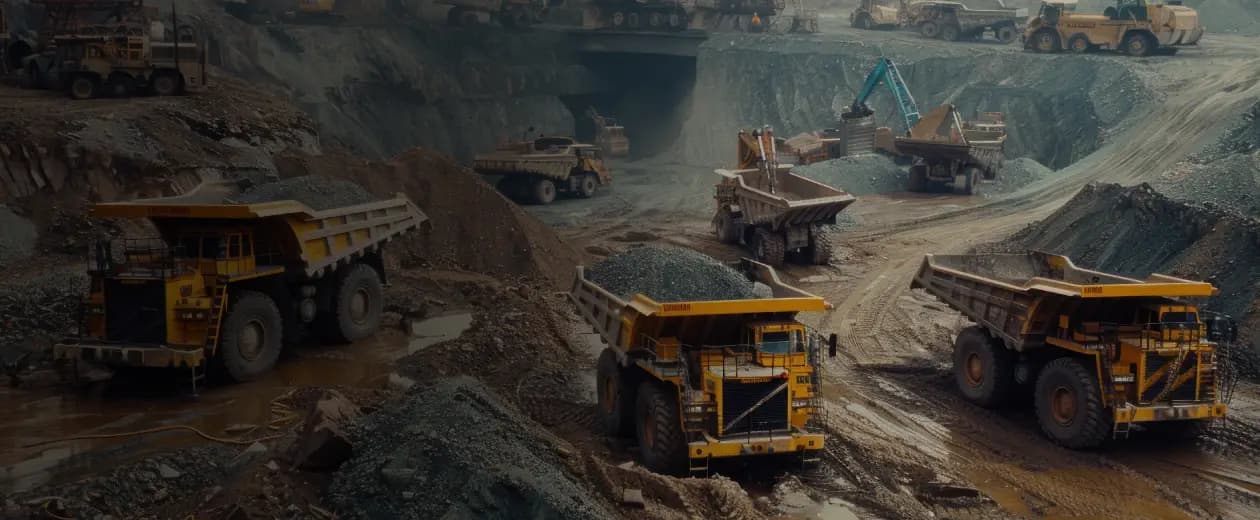
Metals and Mining
The metal and mining industry is crucial for providing raw materials essential to construction, manufacturing, and technology. It faces challenges such as sustainability and resource depletion while adapting through technological innovations and sustainable practices.

Schedule a Call Back
Businesses we've worked with in metals and mining
Showing 315 clients- Clients include
- Essel Mining & Industries · Enershell Alloys and Steel · Ganesh Foundry & Cast · Bharat Aluminium Company · M M Castings · Inland Speciality Metals · N Steels · Sskbp India Alloy · Sarda Energy & Minerals · Eagle Forgings · JMS Mining · Liberty Steel SBQ · Munish Forge · Sarda Metals & Alloys · Sarthak Metals · +12 more























Industries
Recycling & Waste Management
Recycling is an essential part of waste management. It helps to conserve natural resources, reduce landfill waste, conserve energy, and crea...
KNOW MORE ›Trading Business
Trade of a business reflects the value of services exchanged between domestic and foreign economic members, including the value of services ...
KNOW MORE ›Chemicals
There has been a global shift towards Asia as the world’s chemical manufacturing hub lately. The future of the chemical industry in India de...
KNOW MORE ›How to Setup Metal and Mining Industry in India
The metals and mining industry is fundamental to modern civilization, providing essential raw materials for construction, manufacturing, and technology. The sector covers the extraction and processing of metals and minerals that underpin infrastructure development, energy production, and countless consumer products. From ancient civilizations to modern high-tech industries, the role of metal and mining has been essential in the training of economies and companies.
The metallurgical and mining industries are vital to modern civilization, providing essential materials for construction, manufacturing, and technology. As the industry evolves, it faces challenges related to sustainability, resource depletion, and market volatility. However, through technological innovation, sustainable practices, and a focus on social responsibility, the industry is well-positioned to meet future needs and continue to play a key role in global development.
Historical development of Metal and Mining Sector
- Ancient origins
The history of metals and mining dates back thousands of years. Ancient man first discovered metals in their natural form, such as gold and copper, which he used to make jewelry and tools. The Bronze Age marked a significant advancement with the alloying of copper and tin to produce bronze, leading to improved tools and weapons. The Iron Age followed, ushering in the use of iron, which revolutionized agriculture and construction.
- Medieval and Early Modern Periods
During the Middle Ages, mining techniques improved with the use of bellows to increase the heat in smelting furnaces. The development of early mining methods such as shafts and underground galleries allowed the extraction of metals from deeper deposits. The Industrial Revolution of the 18th and 19th centuries brought the mechanization of mining, including steam engines and railways, which considerably increased production capacities.
- 20th Century to Present
In the 20th century, other achievements appeared with the advent of modern technologies, including complex drilling equipment, automated treatment, and advanced metallurgical methods. The exploration of new deposits and the development of new alloys and materials, such as stainless steels and high-strength alloys, are constantly expanding the possibilities for using metals in various industries.
Key Industry Components of the Metal and Mining
1. Exploration and Production
The process begins with mineral exploration, which includes geological surveys, sampling, and analysis. Once a viable deposit is identified, mining methods are chosen based on the type and location of the ore.
Common mining methods include:
- Surface mining: Includes open-pit mining and surface mining, suitable for deposits close to the earth's surface. Underground mining: Used for deeper deposits, including the construction of tunnels and shafts.
- Mountaintop removal: A controversial method of removing the mountaintop to access coal deposits.
2. Processing and processing
After extraction, it is necessary to process and specify the raw ore to obtain the target metal. This involves several steps:
- Crushing and grinding: The ore is crushed and broken down to extract valuable minerals from the waste rock.
- Concentration: Techniques such as flotation, magnetic separation, and gravity separation are used to concentrate the ore.
- Smelting and Refining: The concentrated ore is melted and chemically treated to separate the metal from impurities. This may involve processes such as electrolysis or chemical leaching.
3. Metal production
After the improvement, the metal is produced in various forms, such as ingots, seats, and alloys. These metals are used to make a variety of products, ranging from building materials to electronic components.
4. Environmental Management
The mining industry faces significant environmental challenges, including habitat destruction, and water and air pollution. Effective environmental management practices include:
- Reclamation: Returning mining sites to their natural state after mining. Waste Management: Proper handling and disposal of mine wastes such as tailings and slag.
- Water and Air Quality Management: Implementing measures to minimize pollution and emissions.
Current Trends and Innovations in the Metal and Mining Industry
1. Sustainable Practices
Industries are increasingly focusing on sustainability to minimize their environmental impact and improve resource efficiency. Key initiatives include:
- Green mining: techniques that reduce damage to the environment, such as using renewable energy sources and improving water recycling.
- Circular economy: promoting the recycling and reuse of metals to reduce the need for new extraction.
2. Technological Advances
Technological innovations are transforming the metals and mining industry in the following ways:
- Automation: The use of autonomous vehicles and robotic systems in mining operations increases efficiency and safety.
- Expansion Intelligence method: Technology such as satellite visualization and drones increases intelligence and reduces costs.
- Data and AI analysis: Use of large-scale data and artificial intelligence for predictive services, optimization of resources, and improving processes.
3. Electrification and green technologies
With the rise of electric vehicles and renewable energy sources, the demand for metals such as lithium, cobalt, and rare earths is increasing. The industry is trying to meet this demand by investing in new mining and processing technologies.
4. Community and social responsibility
Mining companies are increasingly focusing on social impact and striving to build positive relationships with local communities. This includes:
- Community participation: involving local people in decision-making and development projects.
- Economic Development: Supporting local businesses and infrastructure projects to benefit communities.
Challenges and Opportunities of the Metal and Mining Sector
- Resource Depletion and Exploration
As easily accessible deposits are depleted, the industry faces the challenge of exploring for and extracting more complex resources. This requires investment in advanced technologies and methods to access deeper or lower-grade ore.
- Environmental and regulatory pressures
The industry is subject to strict environmental regulations aimed at reducing its impact. Compliance with these regulations can be costly, but it also provides opportunities to develop and implement more sustainable practices.
- Market Volatility
Metal prices can be highly volatile, influenced by global economic conditions, imbalances in supply and demand, and geopolitical factors. Companies must manage this volatility using strategies such as diversification and risk management.
- Work and skill
The industry faces a shortage of workers who are qualified for aging and labor, and the need for new examinations in fields such as automation and data analysis. The solution to this problem includes new talent training and investment in charm.
Future Outlook for the Metal and Mining Industry in India
The future of the metals and mining industry will depend on several key factors:
- Innovation: The continued development of technology will help make mining operations more efficient, safer, and more sustainable.
- Sustainability: There will be a strong focus on reducing environmental impact and increasing resource efficiency.
- Electrification: The growing demand for metals used in electric vehicles and renewable energy technology stimulates exploration and production.
- Global economic trends: Economic growth, infrastructure development, and geopolitical dynamics affect the demand for metal and market conditions.
Why Corpseed?
Corpseed can assist the metal and mining industry by providing regulatory compliance support, streamlining project approvals, and offering technology solutions for efficient operations and environmental management.
Enquiry Now
Metals and Mining
Enquiry Now
Metals and Mining
Industries We Cater To
Manufacturing
The manufacturing industry comprises businesses engaged in producing tangible goods Advances in automation, collaboration, innovation, and other areas also contribute to improving manufacturing quality and efficiency using AI and machine learning.
KNOW MOREFrequently Asked Questions
Quick answers to common questions about this service.
What are the main functions of metallurgy and mining?
The metal and mining industry builds and processes metals and minerals required for construction, production, and technology.
What are the main methods of mining?
The main methods are surface mining (including open-pit and strip mining) and underground mining.
How are the minerals processed after extraction?
Ores are processed by crushing, grinding, concentrating, and refining to separate the precious metals from impurities.
What common metals are recovered during mining?
Common metals include iron, copper, gold, silver, aluminium, and rare earth.
What are the environmental impacts of mining?
Environmental impacts include habitat destruction, water pollution, air pollution, and resource depletion.
How is the mining industry addressing environmental issues?
The industry is implementing sustainable practices such as clean mining methods, recycling projects, and waste-to-resource conversion.
What technologies are used in the modern mining industry?
Modern Mining uses intelligence and operations using technology such as automation, drones, satellite visualization, and data analysis.
How does mining affect local communities?
Mining can impact local communities through economic benefits like job creation but may also cause social and environmental challenges.
What role does regulation play in the mining industry?
Regulations ensure environmental protection, worker safety, and sustainable practices in the mining industry.
What are the future trends in the metal and mining industry?
Future trends include increased focus on sustainability, technological advancements, and growing demand for metals used in green technologies and electric vehicles.