
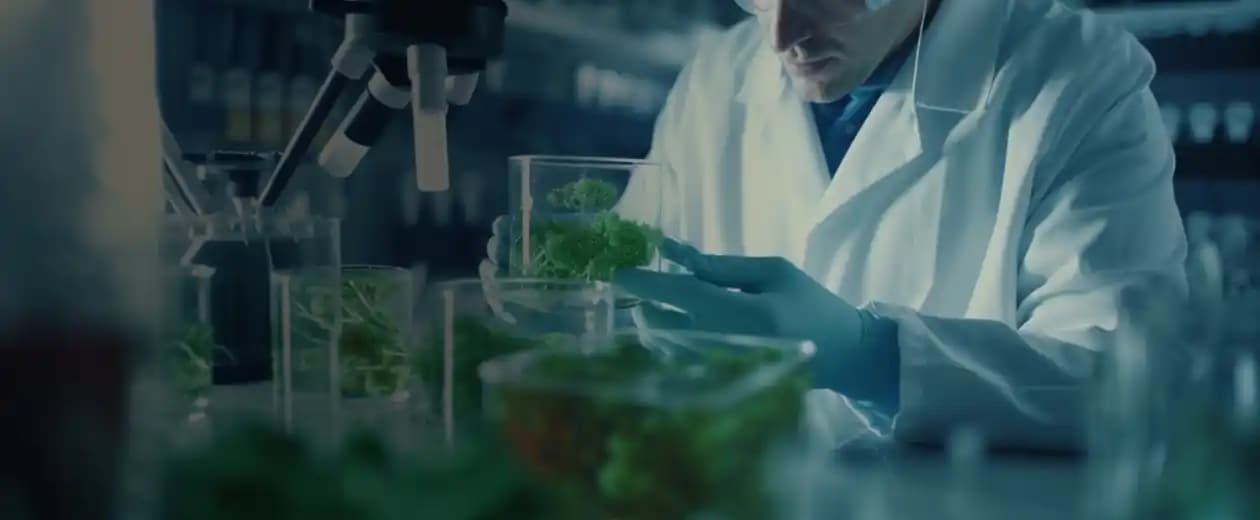
Biotechnology
Biotechnology applies biological information and methods related to molecular, cellular, and genetic processes to enhance products and services. Biotechnology has provided convenience in daily life, enhanced healthcare, increased agricultural production, and generated more job opportunities.

Schedule a Call Back























Industries
Recycling & Waste Management
Recycling is an essential part of waste management. It helps to conserve natural resources, reduce landfill waste, conserve energy, and crea...
KNOW MORE ›Trading Business
Trade of a business reflects the value of services exchanged between domestic and foreign economic members, including the value of services ...
KNOW MORE ›Chemicals
There has been a global shift towards Asia as the world’s chemical manufacturing hub lately. The future of the chemical industry in India de...
KNOW MORE ›How to Setup Biotechnology Industry in India
Biotechnology Is Not About Creating New Products But It Is About Creating New Thinking
India ranks in the top 12 destinations globally for biotechnology. The Ministry of Science and Technology's Department of Biotechnology (DBT) in India is focused on creating a supportive environment for advancing excellence and research in diverse biotechnology sectors.
The biotechnology industry has been leading the battle against the COVID-19 pandemic by developing and utilizing a range of tools like vaccines, antivirals, diagnostic tests, and other resources available to them. The country has been helped by the pandemic to establish the perfect environment for manufacturing, acquiring, and shipping medical equipment and vaccines.
In 2021, there has been a significant increase in biotech startup registrations nationwide, with approximately 1,128 new startups registered, the most in a year since 2015. It is estimated that there are 6,756 biotechnology startups in 2022. By 2025, it is predicted that there will be 10,000 startups in existence.
India has 665 FDA-approved facilities in the United States, representing 44% of global abbreviated new drug applications (ANDA), and more than 1,400 manufacturing plants meeting World Health Organization standards. The nation is also the third-biggest manufacturer of Hepatitis B vaccine through genetic engineering and the second-largest producer of BT cotton (genetically modified pest-resistant cotton plant).
Project Planning for Biotechnology Industry
Demand: The increase in the biotechnology industry in India is driven by growing demand from both local and global markets. Domestic demand is increasing because of initiatives like Aatmanirbhar Bharat and Make in India, while international demand for Indian vaccines and biopharmaceuticals is driven by the globally competitive effectiveness of Indian products. India sends vaccines to more than 150 nations and is a top spot for contract manufacturing and clinical trials. To control healthcare expenses, businesses are utilizing generic and biosimilar medications, with India positioning itself as a center for providing economical access to advanced and comprehensive healthcare options. India accounts for approximately 3% of the worldwide biotechnology industry.
Investment: The commencement of investment in Indian biotechnology occurred with the initial actions of the government and the establishment of a dedicated biotechnology department. The department prepares five-year plans to support investment in various biotechnology-related activities such as research and development, human resource development, setting up biotechnology facilities, and developing products and processes. From 1985-1986 to March 2002, Rs.12.95 billion has been invested since the Department was established. Fifty percent of the investment was made in the past five years and is now growing at a rate of around 30 percent. Initially, a majority of the investment was allocated towards developing human resources and creating infrastructure. Since 1997-98, the yearly funding for research and development has exceeded 60 percent. Maximum funds are allocated to medical and agriculture research.
ROI: The country's economy is forecasted to reach US$ 150 billion by 2025. It is expected to make up about 3.3-3.5% of the nation's GDP, which is an increase from 2.8% in 2021.
There is a significant expectation for an increase in both consumption and exports of diagnostic and medical devices in India. It is projected that the therapeutics industry will produce $15 billion in bioeconomic activity by 2025, thanks to the use of recombinant and biosimilar products.
Having more biotech incubators will enhance research and foster the development of start-ups, which is crucial for the Indian biotech industry to thrive. The biotechnology field, because of its diverse approach, has the capability to offer a variety of solutions for issues in sectors like health, agriculture, environment, energy, and industrial processes.
Technology/ Machinery used in the Biotechnology Industry
The Indian laboratory and analytical instrument sector is about to embark on a revolutionary path, driven by fast-paced technological progress and an increasing focus on homegrown innovation. The industry is set for rapid growth and expansion with the combination of advanced technologies like Artificial Intelligence, Machine Learning, Big Data Analytics, Online and At-line testing, Cloud computing, and Process Analytical Technologies. Various industry experts have emphasized the growing chances for local companies in the laboratory equipment and analytical instrument sector, delving into the changing environment, obstacles, and methods for promoting innovation and competitiveness.
Compliance used in Biotechnology Sector Analysis
Biotech firms must remain up-to-date on the most recent regulations and guidelines relevant to their field. Additionally, it is important for them to
comprehend the regulatory bodies that monitor their operations, like the FDA, EMA, or other regulatory entities.
Biotechnology companies should make sure to follow regulations to comply.
- Establish quality control systems to guarantee adherence to regulatory standards, such as quality assurance measures, methods, validation of processes, and recording procedures.
- Make sure all relevant employees receive thorough training on compliance rules, quality control systems, and the Significance of adhering to established guidelines.
- Regularly perform audits on processes, procedures, and documentation to spot possible compliance problems.
- Create efficient lines of communication among their workforce, regulatory agencies, and other involved parties to guarantee successful interaction and that problems with following rules are quickly recognized and dealt with.
- When dealing with complicated compliance matters and requiring regulatory adherence, consult with regulatory consultants for expert guidance focusing on biotechnology.
- Keep precise documentation of activities, such as data produced in research and development, as well as clinical trial production methods.
Layout Design Consultation of Biotechnology in India:
The rise of the biotechnology sector in India is fueled by increasing needs from both domestic and international markets. The surge in domestic demand is attributed to initiatives such as Aatmanirbhar Bharat and Make In India. In contrast, the global demand for Indian vaccines and biopharmaceuticals is fueled by the competitive effectiveness of Indian products globally. India is a leading destination for contract manufacturing and clinical trials, distributing vaccines to over 150 countries. Businesses are using generic and biosimilar drugs to manage healthcare costs, and India is becoming a hub for affordable access to advanced healthcare choices. India's presence in the global biotechnology industry makes up roughly 3% of the total market share.
Operations of Biotechnology Industry
Biotechnology operations in India are classified into Biopharmaceuticals, Bio agriculture, Bio-IT, and Bio Services sectors. India is among the top providers of affordable medicines and vaccines globally in the biopharmaceuticals sector. India is also ahead in biosimilars, having the highest number of biosimilars approved in the country's market.
Agriculture Waste Management of Biotechnology
Agricultural leftovers are a plentiful source of biomass that can be used by people. These are primarily composed of lignocellulosic and starchy components, with a small amount of proteins as well. A couple of typical uses include utilizing animals for feed and producing energy through burning them. In addition to these, there are numerous areas where agricultural residues can be utilized using biotechnology. Bioprocessing technology has created a new opportunity by using these crop residues as a nutritional source for microorganisms to generate valuable bio-products like enzymes, organic acids, and other beneficial metabolites with applications in different fields. The conversion of biomass into bioenergy is the most valued utilization of agricultural waste, particularly if it is cellulosic.
ESG of Biotechnology Industry
A report released during COP28 in December 2023 by My Green Lab revealed an increase in the participation of pharmaceutical and biotechnology companies in the UN-supported Race-to-Zero initiative, which aims to achieve net-zero carbon emissions by 2050 by bringing together various leading net-zero initiatives. By December 2023, 53 percent of the industry's revenue (35 companies) had participated in the program. Around 63 percent of companies participating in the campaign have adopted a My Green Lab Certification program, with half of them being implemented worldwide.
ESG Reporting of Biotechnology Industry
Manufacturing automation is becoming increasingly important as a key shift in processes. Businesses are using artificial intelligence to evaluate temperature settings, measure flow speeds, and evaluate cooling machinery. Pharmaceutical companies ought to utilize real-time data for identifying energy inefficiency areas and improving energy usage.
ESG Audits have become a key area of focus in developing an ethical supply chain. Businesses currently carry out supplier audits and evaluate the ESG criteria of potential suppliers before engaging them for acquiring raw materials. For instance, Piramal Pharma Solutions used a supplier assessment questionnaire to assess key new suppliers based on ESG criteria before bringing them on board. These efforts are expected to enhance sustainability throughout the supply chain for reducing Scope 3 emissions.
Environmental Management of Biotechnology Sector
Utilizing green chemistry principles is turning into a standard procedure in laboratories. Scientists are being motivated to utilize environmentally friendly products such as software-assisted synthetic pathway designs to forecast drug solubility, toxicity, pharmacodynamics, and pharmacokinetics. Sanofi's guide for selecting solvents is important for scientists to choose eco-friendly solvents in the beginning stages of drug development at sites, based on a classification that ensures safe solvent usage.
Working together with government initiatives and organizations like the National Cancer Institute’s Program for Natural Product Discovery allows for the utilization of a vast collection of product samples (both organic and aqueous extracts and organisms), provides resources to support research within and outside the institute, and helps to overcome obstacles in the realm of natural product-centric drug discovery. The utilization of eco-friendly raw materials reduces the production of harmful waste and contributes to the creation of a range of environmentally friendly products.
Environmental Social Due Diligence/ Audit in Biotechnology Industry
A rising trend involves pharma companies partnering with drug packaging specialists to use eco-friendly materials like polyethylene (PE) or plant-based PE terephthalate from sources like sugarcane, polylactic acid, and polyolefin laminate. Valorisation, which includes recycling, reusing, or converting waste into resources, is an important strategy for reaching circular economy objectives. Saur Industries notably aids pharmaceutical companies in separating Polyvinyl chloride (PVC) from aluminum in blister packaging (two distinct material types for valorization) for potential reuse in alternative industries.
The main focus is on utilizing renewable energy for transportation and cold-chain logistics solutions. Biotech companies are collaborating with suppliers that provide eco-friendly cold chain solutions for storing and delivering drugs, all while reducing their environmental footprint. Over 45 biopharma companies utilized AeroSafe Global's solutions to improve cold chain efficiency, resulting in decreased drug inventory loss, 65% lower carbon emissions, and a 90% reduction in landfill waste.
In addition to forming supply chain partnerships, the pharmaceutical and biotechnology sector should also work with external parties such as consultants and platform providers like GreenPlaces for ESG audits, risk evaluation, and carbon budget planning. Collaborating with advocacy organizations can assist in developing internal sustainability strategy policies.
Natural Raw Materials used in Biotechnology
Differences in raw materials can be divided into three main groups. The initial group consists of trace impurities that change the biotherapeutic's quality, either by directly changing it or by catalyzing its alteration, such as peroxides, aldehydes, reducing sugars, and catalytically active metal ions. The next group includes minute contaminants that are harmful to humans, like lead and aluminum. The third category includes contaminant microorganisms.
Scheme of Government related to the Biotechnology Industry
The Indian government has implemented numerous measures to enhance India's global competitiveness in biotechnology research, innovation, entrepreneurship, and industrial development. Some examples include:
- The Department of Biotechnology (DBT) in India, under the Ministry of Science and Technology, along with UNESCO-TWAS, created a fellowship program for scholars from developing countries who want to conduct biotechnology research for a PhD/post-doctoral study.
- The National Biotechnology Development Strategy 2020-25 allows the government to enhance skill development, resources, and innovation coming together in a robust ecosystem for knowledge exchange.
- In July 2023, the National Biopharma Mission is backing 101 initiatives involving over 150 entities and 30 MSMEs. Employment opportunities have grown, involving 1,065 workers, among them 304 scientists/researchers.
- The Biotech-KISAN scheme provided benefits to 160,000 farmers in the past year from January to December 2022.
Enquiry Now
Biotechnology
Enquiry Now
Biotechnology
Industries We Cater To

Manufacturing
The manufacturing industry comprises businesses engaged in producing tangible goods Advances in automation, collaboration, innovation, and other areas also contribute to improving manufacturing quality and efficiency using AI and machine learning.
KNOW MOREFrequently Asked Questions
Quick answers to common questions about this service.
What advantages does Biotechnology bring?
This technology aids plants in resisting pests, tolerating harsh conditions like cold, drought, and salt in the soil, creating vaccines for animals to combat diseases, and producing pharmaceuticals.
Is there any intention to support research and development in the field of biotechnology?
The Department of Biotechnology and The Biotechnology Industry Research Assistance Council offers a range of programs to aid research and development through excellence centers, collaborations with industries, and funding opportunities. The plans are as listed:
- Hubs for Excellence and Innovation in Biotechnology
- Resources for research, facilities for services, and platforms for collaboration
- Development of society
- Parks and incubators for biotechnology.
What does the Biosafety Research Programme entail?
The primary focus of the Biosafety research program is to assist in the enforcement of biosafety procedures, regulations, and guidelines outlined in the Environment (Protection) Act 1986 and Rules 1989. This is done to guarantee safety from the utilization of Genetically Modified Organisms (GMOs) and their derivatives in both research and practical use, for both individuals and the environment.
What are the 4 major concerns of Biotechnology?
While it offers several advantages such as reducing our impact on the environment and improving healthcare, it also comes with drawbacks. The primary worries focus on ethical, safety, bioterrorism, and environmental concerns.
What is Industrial Technology known as?
Industrial biotechnology, referred to as white biotechnology, represents the third phase of biotechnology advancement, after developments in healthcare and agriculture.
Is Biotechnology a sector or an industry?
Biotechnology is an industry sector driven by science that utilizes living organisms and molecular biology to create healthcare products. Biotech firms also work on developing treatments or methods (like DNA testing).
What is the rank of India in Biotechnology?
India is one of the top 12 countries for biotechnology globally, holding about 3% of the global industry. According to the Global Innovation Index Report 2019, India has the 52nd position.
What are the working conditions in the Biotechnology Industry?
Working conditions differ greatly across different areas of the industry. Health and safety concerns are present in every lab, however, biotech labs typically implement a variety of safety precautions, making the work environment likely safer than in a factory or a farm. Normally, high-tech companies are at the forefront of prioritizing the health and wellness of their employees. In general, these positions are long-term and require full-time commitment. Nonetheless, there are chances for job splitting, working part-time, or taking on temporary positions if desired.
What is the Biosafety Research Programme?
The Biosafety program focuses on supporting the implementation of biosafety procedures, rules, and guidelines mandated by the Environment (Protection) Act 1986 and Rules 1989. This ensures safety for users and the environment when using Genetically Modified Organisms(GMOs) and their products in research and applications.
Are Biotech projects approved by Govt. of India?
Biotech’s portable plants, RCC digesters, and waste-to-electricity plants have received approval from the Ministry of New and Renewable Energy (MNRE) in India. Thus, such plants in India are qualified to receive subsidies from MNRE