
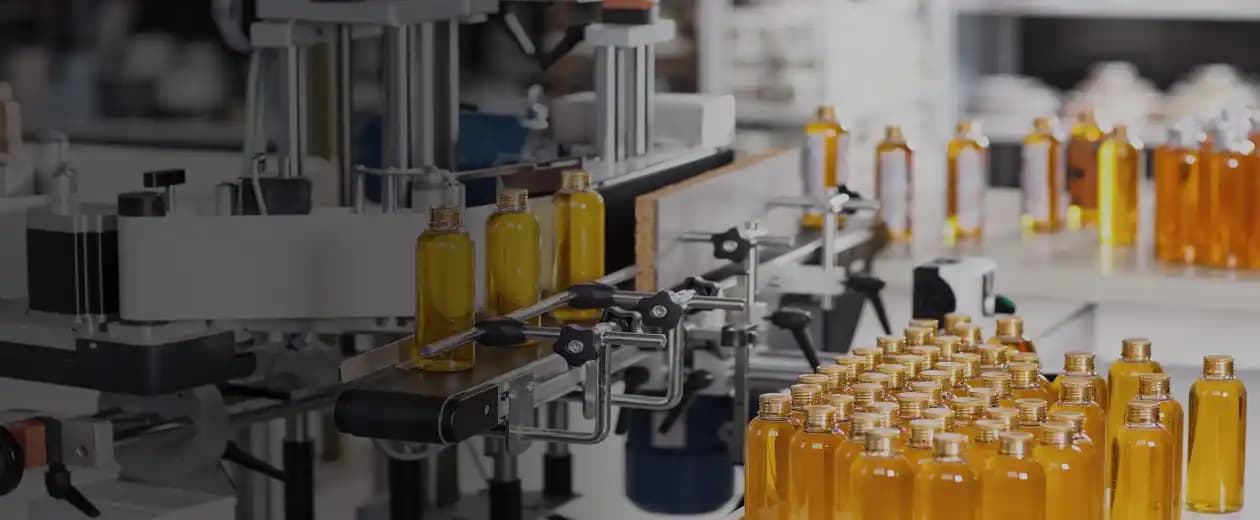
Ayurvedic Product Manufacturing
Ayurveda is an ancient healthcare system from India that is holistic and focuses on prevention. The meaning of Ayurveda comes from the Sanskrit words Ayu, which refers to life, and Veda, which means knowledge. Therefore, Ayurveda translates to knowledge of life. The notion is rooted in the belief that stress and an imbalance in one's consciousness lead to the onset of a disease.

Schedule a Call Back























Industries
Recycling & Waste Management
Recycling is an essential part of waste management. It helps to conserve natural resources, reduce landfill waste, conserve energy, and crea...
KNOW MORE ›Trading Business
Trade of a business reflects the value of services exchanged between domestic and foreign economic members, including the value of services ...
KNOW MORE ›Chemicals
There has been a global shift towards Asia as the world’s chemical manufacturing hub lately. The future of the chemical industry in India de...
KNOW MORE ›Ayurvedic Product Manufacturing Industry in India
The Ayurvedic product manufacturing industry in India is a rapidly growing sector, deeply rooted in the country's ancient medical system of Ayurveda. This industry has gained significant momentum in recent years due to increasing awareness of natural and holistic health solutions both domestically and internationally.
The Ayurvedic product manufacturing industry in India is set for robust growth, supported by strong consumer demand, government initiatives, and global acceptance. Companies in this sector are increasingly focusing on innovation, quality, and sustainability to capitalize on the growing market opportunities.
Industry Scenario
The sector of Ayush has experienced a yearly growth of 17% from 2014 to 2020. The industry's market size has increased from $2.85 Bn in 2014 to $18.1 Bn, showing a remarkable growth of nearly 6 times. The industry is expected to create around 3 million employment opportunities.
Distribution in Ayush market size: Herbal Plants (43.35%), Nutraceuticals (24.65%), Pharmaceuticals (14.11%), Cosmeceuticals (8.37%), Plant Derivatives (5.14%), and Plant Extracts (4.39%). The field of herbal medicine expanded by 7.4% annually from 2014 to 2020. Different sub-categories, notably the herbal medicine industry, grew by 18.5% in 2020 with a market share of 14.1% during that time.
The country saw a significant increase in exports in the sector, growing from $1.09 billion in 2014 to $1.54 billion in 2020, with an annual growth rate of 5.9%. In 2020, herbal pharmaceuticals made up 35.2% of Ayush's exports, with extracts and nutraceuticals each accounting for approximately 22% of the total. Additionally, medicinal and aromatic plants contributed 19.9% to the overall export share. India sends Ayush products to various markets including the USA, Nepal, Russia, Philippines, UAE, Kenya, Germany, Vietnam, China, Italy, The UK, Western Europe, Japan, Hong Kong, and more.
The Ministry of Ayush and the World Health Organization (WHO) are setting up the first and only global office for traditional medicine (WHO- Global Centre for Traditional Medicine). The Host Country agreement was signed by the World Health Organization and the Government of India on March 25th, 2022 to set up the W.H.O- Global Centre for Traditional Medicine in Jamnagar, Gujarat. The Government of India has pledged about $250 Mn over 10 years to support the WHO Global Centre for Traditional Medicine as the primary investor.
The Ministry of Ayush is continually working on creating a conducive environment for investments, forming collaborations with reputable academic institutions like CCRAS and CSIR for Transfer of Technology (ToT), and advancing digitization with platforms like e-Charak and e-Aushadi.
Key Segments
- Herbal Supplements: Including products like Ashwagandha, Brahmi, and Triphala.
- Personal Care Products: Such as Ayurvedic shampoos, conditioners, soaps, and skincare products.
- Medicines: Traditional Ayurvedic formulations like Chyawanprash, Arishtas, and Asavas.
- Health Foods: Including Ayurvedic teas, juices, and dietary supplements.
Growth
- Increasing Health Awareness: Growing awareness of health and wellness has led to higher demand for natural and herbal products.
- Government Support: Initiatives like the Ministry of AYUSH (Ayurveda, Yoga & Naturopathy, Unani, Siddha, and Homoeopathy) promote traditional Indian medicine.
- COVID-19 Impact: The pandemic has led to a surge in demand for immunity-boosting products, many of which are Ayurvedic.
- Rising Disposable Income: Higher income levels have increased consumer spending on health and wellness products.
Future Prospects
- Innovation and R&D: Increased focus on research and development to create new and effective Ayurvedic formulations.
- E-commerce Growth: Expansion of online retail channels to reach a broader audience.
- Global Expansion: Growing export opportunities and global acceptance of Ayurvedic products.
- Sustainable Practices: Emphasis on sustainable sourcing of raw materials and eco-friendly manufacturing processes.
How We Can Help
Now is the perfect opportunity to launch your Ayurvedic or herbal cosmetics brand with the help of our successful third-party manufacturing services. Having extensive experience and skill in producing Ayurvedic and herbal products, Corpseed can assist you in launching your brand with no upfront investment. The Ayurvedic company in India offers its expertise in manufacturing, packaging, and branding to help you achieve success and reputation in the market without needing to invest heavily.
Enquiry Now
Ayurvedic Product Manufacturing
Enquiry Now
Ayurvedic Product Manufacturing
Industries We Cater To

Manufacturing
The manufacturing industry comprises businesses engaged in producing tangible goods Advances in automation, collaboration, innovation, and other areas also contribute to improving manufacturing quality and efficiency using AI and machine learning.
KNOW MOREFrequently Asked Questions
Quick answers to common questions about this service.
What is the GST rate for Ayurvedic medicines?
12% GST is charged on Ayurvedic and herbal medicines.
What is the duration of the shelf life for your herbal Medicines?
The expiration date of our Herbal/Ayurvedic medicines is 3 years after they are manufactured, not 3 years after you buy them.
What is the scope and extent of the Ayush services sector?
The Ayush service sector in India has grown significantly & was estimated to be over Rs 1,85,000 Cr in 2022, similar in size to the Ayush manufacturing sector. The quickest growing sections in Ayush services are Wellness Travel and Medical Value Travel. Ayush is among the top five health services in India for Medical Value Travel (MVT) earnings, expected to reach $13 billion in 2022.
What is the process to obtain a Herbal franchise in India?
For acquiring a Herbal franchise in India, explore trustworthy herbal companies that provide franchise opportunities, a diverse range of pharmaceutical products, complete marketing assistance, and other advantages at affordable prices. Choose the most suitable company that meets your needs and offers services within your budget. Get in touch with the company to obtain the necessary details regarding their franchise opportunities.
What certifications are needed for a Herbal Franchise Business?
Certain essential certificates required to establish a trustworthy Herbal Franchise business in India consist of Business Registration, (GST) Registration, Trade License, Good Manufacturing Practice (GMP) certification, and Trademark Registration. This certificate enables you to establish a reliable connection with your partners and boost sales in the market.
Does Ayurvedic medicine comply with FSSAI regulations?
Selling Ayurvedic herbal products necessitates an Ayush License for the manufacturer while selling herbal food supplements requires both the manufacturer and seller to have an FSSAI license.
What are the Advantages of Initiating an Ayurvedic PCD Pharma Franchise in India
Currently, the Ayurvedic Franchise Business in India is thriving because of the growing popularity of herbal medicine. Individuals understand the advantages of Ayurvedic items and the drawbacks of chemical products. Herbal PCD Pharma Franchise is a business with high returns and minimal investment.
What steps can be taken to guarantee success in the PCD franchise business model?
Ensure your success in the ayurvedic franchise business by achieving high profits and establishing a robust distribution network throughout PAN India. Employ marketing and promotional strategies focused on the client to boost sales in the ayurvedic sector.
What are the difficulties of launching an Ayurvedic franchise business in India?
Starting an Ayurvedic franchise company in India encounters obstacles such as adhering to legal requirements, setting up a strong supply chain, effective marketing, and ensuring the quality of Ayurvedic products.
Which documents need to be submitted for applying to Ayurvedic third-party manufacturing companies?
The necessary paperwork for seeking approval from Ayurvedic third-party manufacturing firms may consist of an Ayush manufacturing license, product formulas, ingredient lists, production process specifics, quality control protocols, stability assessment results, and product packaging.