
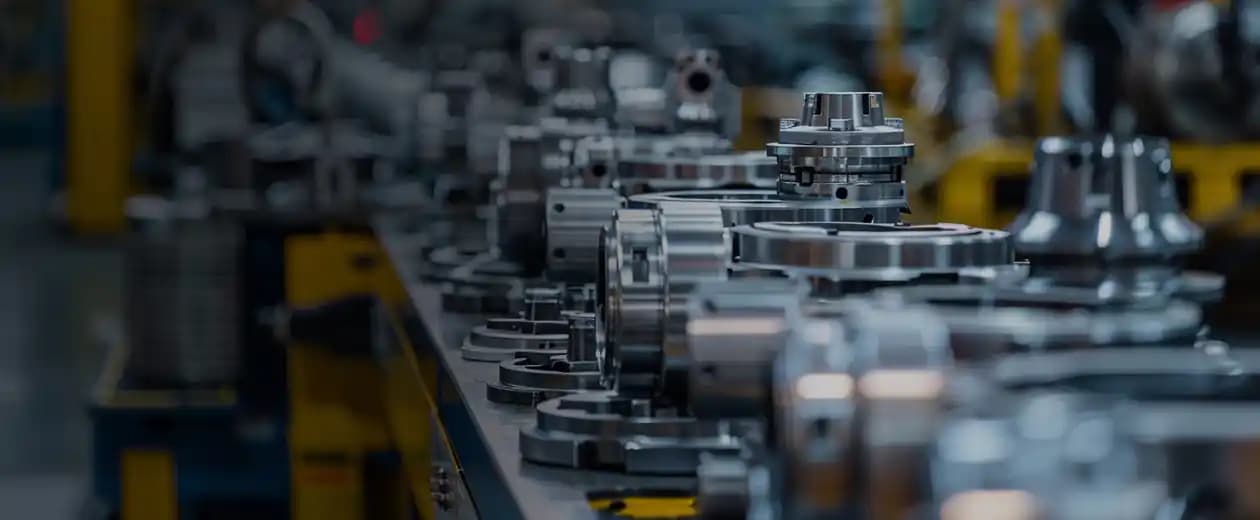
Auto Components
The automotive sector in India plays a significant role in the nation's manufacturing economy. The auto component manufacturing (ACM) segment plays a crucial role in backing this ever-changing industry. Recently, India has seen an increase in the number of Indian OEM suppliers in the ACM segment, positioning the country as an important player in the global automotive supply chain.

Schedule a Call Back
Businesses we've worked with in auto components
Showing 320 clients- Clients include
- Bundy India · BMW India · Aptiv Connection Systems India · Subros · Federal-Mogul Bearings India · Denso India · Aptiv Components India · ATC Tires · Franklin EV India · Global Autotech · Shinpoong Automotive India · Hirotec India · Setco Auto Systems · ATC Tires AP · Porwal Auto Components · Walterpack Automotive Products India · Antony Commercial Vehicles · Ceat · Kwangjin India Auto Systems · Tresa Motors · +17 more























Industries
Recycling & Waste Management
Recycling is an essential part of waste management. It helps to conserve natural resources, reduce landfill waste, conserve energy, and crea...
KNOW MORE ›Trading Business
Trade of a business reflects the value of services exchanged between domestic and foreign economic members, including the value of services ...
KNOW MORE ›Chemicals
There has been a global shift towards Asia as the world’s chemical manufacturing hub lately. The future of the chemical industry in India de...
KNOW MORE ›How to Setup Auto Components Industry in India
Driving Satisfaction With Every Repair
The auto component industry in India plays a crucial role in driving both macroeconomic growth and employment. The sector includes a variety of players, ranging from big companies to small businesses, located in various clusters across the nation. The auto parts sector contributed 2.3% to India's GDP and employed over 1.5 million individuals. The automotive sector will account for 5-7% of India's GDP by 2026. The Automotive Mission Plan (2016-26) aims to create 3.2 million new jobs by 2026. It is anticipated that the Indian Auto Components sector will reach $200 billion by 2026. By 2024, India plans to produce 500,000 electric three-wheelers, a minimum of 55,000 electric four-wheelers, and 7,000 electric buses.
Insights of Auto Components
- Skilled Workforce: India has a skilled and affordable workforce, making it an appealing choice for manufacturing operations.
- Strong supply chain: India's established automotive supply chain guarantees a smooth movement of components and materials.
- Increasing demand: India's expanding middle class and urbanization have led to a flourishing domestic market for automotive products. By 2025, India's automotive market is anticipated to become the third largest globally.
- Strategic positioning: India's strategic positioning enables convenient entry to other Asian markets, positioning it as a crucial export center.
Project Planning for Auto Components Industry
The sector can be broadly divided into organized and unorganized sectors. The structured industry serves OEMs with high-value precision instruments, while the unstructured sector serves mostly aftermarket needs with low-value products. It is projected that the Indian auto component industry will experience a 20-23% growth in FY22 due to robust international demand and a revival in the local original equipment and aftermarket sectors.
Demand: In FY23, the turnover of the automotive component industry rose by 33 percent, reaching INR 5.59 trillion, marking its highest growth rate. This significant growth was due to a build-up of demand, better availability of raw materials, and higher sales of larger vehicles, specifically sport utility vehicles (SUVs). According to the Automotive Component Manufacturers Association of India (ACMA), the export of car parts from India rose by 5 percent in FY23, reaching a sum of US$20.1 billion.
Raw Material: The Indian auto component manufacturing sector is fragmented into various sub-divisions, all playing a vital role in the advancement of the automotive industry as a whole. This consists of engine and transmission components, electrical and electronic parts, suspension and brake systems, as well as interior and exterior parts. In 2023, the Indian ACM market is comprised of engine and transmission parts at 35 percent, electrical and electronics components at 30 percent, suspension, and braking systems at 20 percent, and interior and exterior components at 15 percent. A more detailed analysis of these smaller categories suggests a growing market that is poised to fill the voids in the worldwide ACM industry. To strengthen the sector even more, the federal government has introduced rewards to entice investors.
ROI: India’s favorable business policies have enticed significant foreign investment in the automotive industry, as the government permits 100 percent foreign direct investment.
The automotive industry has seen ongoing growth in investments, receiving US$5.2 billion in foreign direct investment (FDI) in 2022. This brings the sector's total FDI inflow to US$34.11 billion from April 2000 to December 2022, making up approximately 5.45 percent of India's total FDI inflow during that time. The increase in foreign direct investment (FDI) has resulted in the growth of cutting-edge manufacturing infrastructure and technological advancements, making India's position stronger in the global advanced manufacturing market.
Investment: India's Automotive Plan 2026 aims to establish the country as a leading global center for the manufacturing of vehicles and auto parts. The ACMA predicts that automakers and suppliers will probably invest during the years FY24 to FY28. The Indian automobile sector plans to invest around $7 billion by FY28 to enhance domestic production of advanced components such as electric motors.
Technology/Machine of Auto Components
The Indian Auto Component Industry achieved a record turnover of $69.7 billion, showing growth of 33% in the fiscal year 2022-23. The increasing number of global automobile Original Equipment Manufacturers (OEMs) in the Indian auto components sector has led to a substantial rise in the domestic production of their components. $36.26 billion was the amount of Foreign Direct Investment received by the Indian automotive sector from April 2000 to March 2024. The automatic route permits Full foreign direct investment in the automotive parts sector.
There is an anticipation of growth in the agricultural machinery market as well. The high proportion of informal retail, inadequate harvesting equipment, and heavy dependence on labor are constraining the present market. The government's efforts to automate farmland through the Sub-Mission on Agricultural Mechanization could increase the need for advanced machinery, leading to a higher demand for components in areas such as threshers, rotavators, precision agriculture solutions, and tractor linkage parts.
Compliance Requirements under Auto Components Industry
Understanding complicated rules and meeting standards can present difficulties, but there are attempts to simplify procedures. Foreign companies are encouraged to enlist the help of local experts to reduce unexpected expenses and obtain essential approvals, as well as take advantage of various incentives such as tax breaks and hiring benefits.
Layout Design Consultation of Auto Components Sector
India's emergence in the worldwide automobile parts production industry and its objectives in electric vehicle adoption represent a major change in the international automotive market. India is ready to play a significant role in the automotive sector's future, thanks to a thriving indigenous ACM ecosystem, backing for innovation and EV manufacturing, and government efforts to boost production and consumption.
In the upcoming years, India's ACM industry is anticipated to have a significant impact on shaping the future of mobility, both domestically and internationally.
Foreign companies and small and medium enterprises (SMEs) in the auto component manufacturing sector have a high chance of thriving in the Indian market by implementing proper investment, innovation, and strategic planning.
Operations of Auto Components Industry
Improvements in infrastructure and logistics, such as the expansion and enhancement of highways, railways, ports, airports, and warehouses, have facilitated quicker and more cost-effective transportation of raw materials, finished products, and individuals domestically and internationally. This has enhanced the effectiveness and competitiveness of the automobile parts sector.
Waste Management/Generation in Auto Components:
Evolving regulations may lead to higher expectations from auto component manufacturers, requiring them to reassess their production methods to meet regulatory guidelines.
- Emissions: Implementation of BS-VI rules by 2020, focus on EV adoption, talks about methanol, CNG, and possibly fuel cells.
- Safety: ABS is required on cars, buses, and motorcycles, as well as cabin safety and rollover protection systems.
- Scrappage: A policy requiring old trucks to be scrapped is affecting the use of lead and disrupting the value chain.
ESG of Auto Components Industry
The automotive sector faces significant environmental risks, with the potential for increasing social risks as consumer behaviors evolve in the long run. Environmental rules are pushing the worldwide car sector to produce vehicles that are carbon dioxide (CO2) neutral. Significant financial commitments to new technologies and products are already impacting operating margins and free cash flow. This report card elaborates on the Risk Atlas sector analysis by honing in on the credit-specific effects, which in turn serves as the foundation for assessing the risks and opportunities of individual companies within the sector.
Environment Management of Auto Components Sector
The transition from BS-IV to BS-VI in India's vehicle emissions standards is a bold move that will have extensive impacts on the automotive components industry as a whole. India is striving to match European countries in emissions standards by skipping from BS-IV to BS-VI regulations. In practical terms, starting in 2020 Indian car manufacturers must introduce various new technologies into their vehicles to decrease NOx emissions by 25% in gasoline engines and by 68% in diesel engines.
The new policy will require the integration of on-board diagnostics (OBD) systems, among other technological upgrades necessary. OBD systems will monitor pollution generated by vehicles in real time to make sure emission control parts are working at their best and can detect issues promptly for fast repairs.
Environment Social Due Diligence / Audit of Auto Components
The importance of sustainability in the automotive parts sector cannot be overstated, as it results in favorable environmental impacts and business prosperity. Adopting environmentally friendly techniques, like sustainable manufacturing, using natural fibers, and implementing green interior design, enables businesses to meet customer demands and comply with regulations.
Ongoing innovation and cooperation are crucial for creating and executing sustainable solutions throughout the industry. As the automotive industry changes, companies need to remain dedicated to eco-friendliness, adjust to new developments, and take advantage of chances to promote a more environmentally friendly planet.
Scheme of Government Related to the Auto Components Industry
The government has set aside 10 billion US dollars for different projects such as improving infrastructure, training programs, and research and development. This plan plays a key role in guiding the development of the ACM industry and bringing it in line with international norms.
The Indian government's policies, such as the PLI scheme and incentives for manufacturing, create a favorable environment for foreign investments. In 2022, a total of 85 new investments were attracted in the ACM sector due to these incentives. Some of the companies that invested include Maruti Suzuki, Hero MotoCorp, Tata Autocomp, Mitsubishi Electric, Toyota Kirloskar, Motherson Sumi, Bosch, and Lucas-TVS.
Enquiry Now
Auto Components
Enquiry Now
Auto Components
Industries We Cater To
Manufacturing
The manufacturing industry comprises businesses engaged in producing tangible goods Advances in automation, collaboration, innovation, and other areas also contribute to improving manufacturing quality and efficiency using AI and machine learning.
KNOW MOREFrequently Asked Questions
Quick answers to common questions about this service.
How do auto parts function?
The auto parts sector involves producing, distributing, or selling components for automobiles. Having a basic understanding of car mechanics or previous experience in auto repair can lead to success.
What are the environmental problems caused by the automotive sector?
Up to now, we have established the following hypotheses about the environmental dangers:
- demand for plant emissions to be reduced.
- lack of raw materials,
- security in terms of energy and oil supply,
- controlling engine emissions.
- regulating traffic, and
- necessity for reclaiming the product.
What is the meaning of OEM?
OEM is an abbreviation for original equipment manufacturer. GM is the original maker of the car components available at Penske Chevrolet of Cerritos. Aftermarket car parts are produced by third-party companies using designs from OEM parts.
What distinguishes spare parts from components?
Spare items are a broad category, whereas spare components are parts specifically created for a particular system. They play a vital role in preserving the effectiveness and durability of a system. The quality may differ depending on whether they are original equipment manufacturer (OEM), aftermarket, or second-hand parts.
What does the future hold for the car parts industry?
The auto parts industry has a bright future ahead due to the growth of e-commerce and technological advancements. Nevertheless, there is plenty of work that still needs to be done to improve the purchasing experience for customers. Challenges that must be addressed by the industry include the absence of standardized pricing and transparency.
What is the latest development in the automotive sector?
2024 will see 10 significant trends in the automotive industry.
Electric vehicles, connectivity, mobility solutions, sustainability, sales, and distribution models are key focus areas for automotive industry trends. To break into the developing market like the growing popularity of electric cars in China and India, it is crucial to track these patterns.